Get Full Government Meeting Transcripts, Videos, & Alerts Forever!
Get email alerts on the Economic Development topic
No spam. Unsubscribe anytime.
St. Clair County holds workshop on Economic Development Alliance amid disputes over NDAs, transparency and siting
Summary
Commissioners and residents aired competing views on continuing county funding for the Economic Development Alliance of Saint Clair County, with EDA leaders outlining programs they say support jobs and businesses while township officials pressed for more transparency on confidential project negotiations and local review processes.
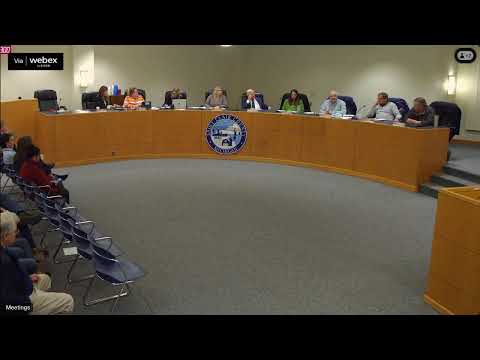
The St. Clair County Board of Commissioners held a workshop Jan. 9 to review whether the county should continue funding the Economic Development Alliance of Saint Clair County and to identify problems in how its services reach communities. The meeting included a 90-minute presentation by EDA Director Dan Casey and more than two hours of questions and public comment from township officials, business leaders and residents.
The session matters because the county currently provides roughly $300,000 a year in direct funding plus in‑kind services to a nongovernmental EDA board, and several rural supervisors said they feel excluded from confidential project discussions that can lead to large industrial developments. “Our mission is about prosperity. It's about creating prosperity for residents, companies in the community, and communities themselves,” said Dan Casey, describing the EDA’s role in attraction, retention, workforce and small‑business programs.
Supporters during the workshop described concrete services the EDA provided during COVID, grant administration and job retention work. “They managed about $2,500,000 in grants that went out to businesses,” Casey said, and he noted the EDA operates two incubators, a pre‑seed fund and a business retention program that meets a defined set of companies each year. Janice Mueller, regional director of the Michigan Small Business Development Center, told commissioners that confidentiality is standard in economic development: “Confidentiality is paramount. It is crucial to protect sensitive business information.”
Opponents — particularly supervisors from rural townships including Wales and China — said the EDA’s use of nondisclosure agreements (NDAs) and confidential project handling has left residents surprised by proposals, especially for large solar and data‑center projects. Wales Township Supervisor Liz Masters read a FOIA request into the record and said, “Wales Township has never been a member of the EDA.” China Township Trustee Dan Turk urged that publicly funded development work be subject to more direct public oversight: “We want an EDA that's ran by the county board of commissioners instead of a board of directors.”
Several township speakers said the pace and confidentiality of attraction work can outstrip a small jurisdiction’s capacity to review proposals or to update zoning and ordinances. Township officials described receiving late notices or being asked to sign NDAs before local officials or neighbors had substantive information. Pastor Anthony Ferrelli and other residents cited a proposed data‑center near a church and school as the episode that prompted broad concern over notification and siting.
EDA staff and board members pushed back, saying the nonprofit model lets the alliance move quickly and preserve company confidentiality until a public process begins. Quentin Bishop, city superintendent for the city of St. Clair, told the county commissioners that reducing EDA funding would jeopardize the agency’s ability to help communities secure grants and coordinate complex projects: “Reducing funding in any capacity puts real jobs on the line.”
Commissioners agreed to continue the review process: the board’s chair said three workshops will examine issues (problems, solutions, and options to bring before the full board). At the meeting commissioners approved a procedural motion to change the order of business so the EDA presentation came before public comment; the motion carried on a voice vote. The meeting ended with a motion to adjourn, which was also approved by voice vote.
The discussion left several clear next steps: commissioners will hold follow‑up workshops to consider written proposals such as a memorandum of understanding that Casey described as a possible way to define roles, reporting and confidentiality rules; townships sought explicit guarantees that the EDA will not place projects in nonmember communities without advance notice; and the commission will weigh whether county funding should be conditioned on enhanced transparency and formal reporting.
The county did not vote at this workshop to change funding; several commissioners said they sought more information before acting. The debate is now likely to continue publicly: township leaders asked the board to obtain EDA financial records and grant agreements, and at least one township filed a FOIA request during the meeting. The board scheduled additional workshops to develop potential solutions and to report back at a regular meeting.