
Evanston social services committee coalesces around poverty reduction, basic-needs focus for 2026–27 grants
Get AI-powered insights, summaries, and transcripts
Subscribe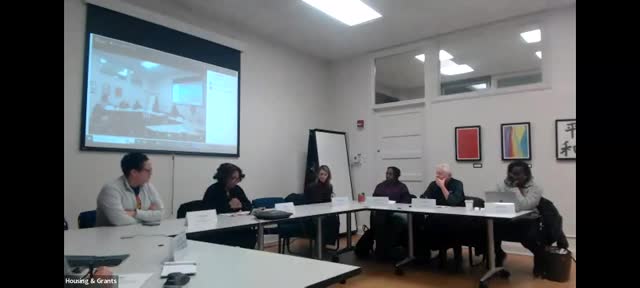
Summary
At its first meeting of 2025 the Evanston Social Services Committee discussed the 2026–27 public-services grant cycle, endorsed prioritizing poverty reduction and basic needs, and signaled support for collaborative, wraparound proposals. Staff will return with a refined priorities recommendation by March and open applications in summer.
At its first meeting of 2025, the Evanston Social Services Committee discussed priorities for the 2026–27 public‑services grant cycle and signaled a consensus to prioritize poverty reduction and meeting basic needs, favoring proposals that offer wraparound services and interagency collaboration.
The committee — which advises the City Council on public‑services funding and does not directly allocate city appropriations — reviewed results of a community needs assessment and an inventory of services. City staff reported that the assessment returned under 400 surveys and showed broad demand for basic supports: benefit enrollment services, food assistance and youth programming were among the most‑used services; respondents also reported gaps, especially in financial literacy and legal assistance. Staff told the committee that case management currently represents about one‑third of the committee’s public‑services funding.
Why it matters: the committee’s priorities guide which agencies are encouraged to apply and what types of projects will score higher when the panel scores applications before recommending awards to City Council. Committee members framed poverty reduction and basic needs as outcomes that cut across age and demographic groups, and discussed using scoring to favor collaborative proposals that reduce duplication and lower administrative burden for service providers.
Key details from the meeting
- Community needs assessment and service landscape: Staff said the survey sample consisted of fewer than 400 returned surveys. Percent results reported by staff included approximately 30% of respondents using benefit‑enrollment services and 24% using youth services; 22% reported being unable to enroll in financial‑literacy offerings. Staff also supplied maps showing concentrations of extremely low‑income and rent‑burdened households in parts of Evanston, noting one block influenced by Westminster Place.
- Program types and gaps: Committee members identified food security, housing stability and financial literacy as high priorities. Members discussed the city’s guaranteed‑income pilot (reported in the meeting as a $500/month pilot focused on families with children under 5 and described as having been launched as a pilot and later renewed) and asked staff to provide clearer funding-source details. Staff said some partnerships for the guaranteed‑income effort have included Northwestern and other research partners; one staff speaker recalled that ARPA (American Rescue Plan Act) funds helped seed the pilot.
- Strategy and scoring guidance: Committee members proposed that applications offering wraparound services (coordination across housing, food, benefits, legal and workforce supports) and formal collaborations among multiple agencies receive higher scores. The group discussed allowing joint proposals or larger collaborative grants rather than only small, separate awards so a set of agencies could reduce duplication and offer coordinated intake and reporting.
- Next steps, timeline and outreach: Staff asked the committee to finalize priorities by March so the priorities could be incorporated into the 2026–27 application; the city will open applications after that timeline (staff indicated applications would open in the summer). The committee requested learning sessions with other city divisions and external partners (workforce development, housing programs, food providers) before scoring begins. Staff said the Consolidated Annual Performance and Evaluation Report (CAPER) and other materials will be available for public review in late February to mid‑March and will include federal funding information submitted to HUD.
Administrative actions and logistics
- The committee adopted the meeting minutes in a recorded voice vote; members who verbally registered “aye” included Ms. Chair McMillan, Samantha Oaktree and Julie Langley and the chair indicated assent. The minutes were recorded as approved.
- The committee confirmed a February meeting (Feb. 13 was discussed) and that by March it expects to operate from the new location at 909 Davis; staff said the March meeting will take place at the new site and that the committee will work with staff to schedule guest presentations about workforce and housing programs.
What the committee did not decide
- The committee did not make binding funding awards at this meeting nor set exact grant amounts or application scoring weights. Members discussed possible higher scores for collaborative, wraparound proposals but did not adopt a final scoring rubric. Staff will return with draft priorities and a proposed application timetable for committee review and potential vote in March.
Ending
Committee members and staff said they will use the next meeting(s) to collect more landscape data (workforce numbers, housing program details, food‑access mapping) and to refine priorities and scoring guidance before the application round opens. Agencies interested in applying will be invited to informational sessions run by city staff once the priorities and timeline are finalized.