Get Full Government Meeting Transcripts, Videos, & Alerts Forever!
Get email alerts on the Higher Education Budget topic
No spam. Unsubscribe anytime.
ND University System outlines SB 2003 priorities as enrollment and graduation rates rise
Summary
State Board of Higher Education and NDUS officials presented an overview of Senate Bill 2003, highlighting record enrollment and rising graduation and retention rates while urging continued legislative support for workforce-focused programs and campus needs.
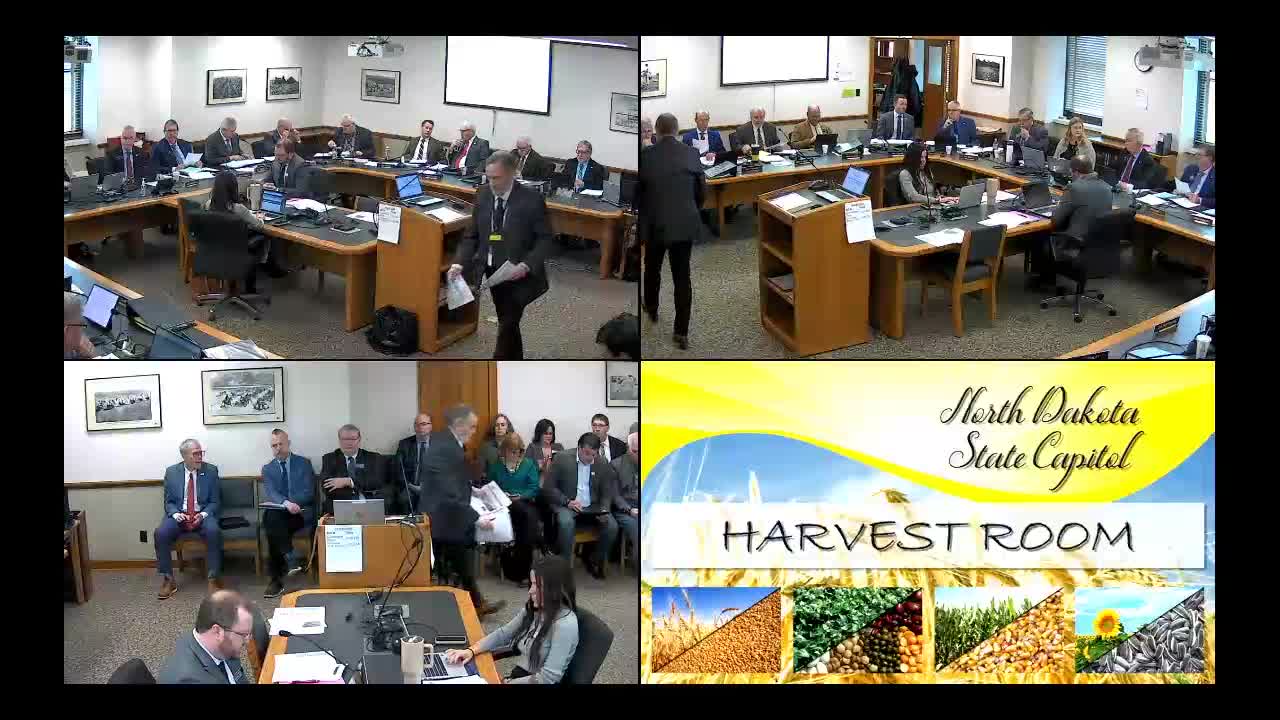
State Board of Higher Education Chair Tim Mychajluk told the Senate Appropriations Committee the board is asking lawmakers to consider Senate Bill 2003 as part of continued support for the North Dakota University System.
"My name is Tim Mychajluk, and I serve as chair of the State Board of Higher Education," Mychajluk said, opening the presentation and outlining the board's nine-campus oversight and six strategic goals, including workforce development and student affordability.
The board and system officials emphasized that the North Dakota University System (NDUS) is outperforming national trends: eight of 11 institutions posted enrollment gains in fall 2024, with Williston State College up about 16 percent, Mayville State up 8.2 percent and North Dakota State School of Science up 7.2 percent. NDUS reported a systemwide graduation rate of roughly 57 percent, an 8.8 percentage-point increase from the previous year, and a retention rate near 75 percent.
"We have celebrated record enrollment, retention and graduation rates across our institutions," Mychajluk said, adding that the system’s mission is to connect students to workforce opportunities across the state.
Student leaders urged attention to affordability, housing and mental-health services. Sammy Weber, president of the North Dakota Student Association, said low tuition and scholarships are a major driver in students’ decisions to enroll in North Dakota and flagged housing quality and limited counseling capacity as the top student concerns.
"A significant factor most individuals consider when deciding to pursue higher education is how much it is going to cost and if they can afford it," Weber said, noting that some campuses have only a part-time counselor for over 1,000 students.
Committee members questioned several system practices during the overview. Senator Dwyer pressed Mychajluk on a separation package paid to a recently retired Bismarck State College president; Mychajluk said the package was negotiated after executive-session discussions and that the campus plans to fund the separation from campus resources.
NDUS officials also summarized the board’s Envision 2035 strategic planning process, branded RunND (retool and upscale now for North Dakota), which the board says identifies workforce, student vitality and intelligent machines as pillars for future planning. The SBHE has used those themes to shape budget requests the board will present to the legislature.
No formal committee vote occurred during the presentations; officials provided the overview and answered questions. The system office and individual campus presidents will return to subcommittee hearings to discuss specific budget items and requests in more detail.