Get Full Government Meeting Transcripts, Videos, & Alerts Forever!
Get email alerts on the Medicaid Human Services topic
No spam. Unsubscribe anytime.
Health and Human Services budget rises; FMAP, Medicaid expansion and state hospital planning highlighted
Summary
Committee briefings showed the Department of Health and Human Services budget is a major driver of general fund growth, with Medicaid costs, FMAP changes and home- and community-based services among top spending pressures. The executive recommendation includes one-time SIF planning funds for a new state hospital.
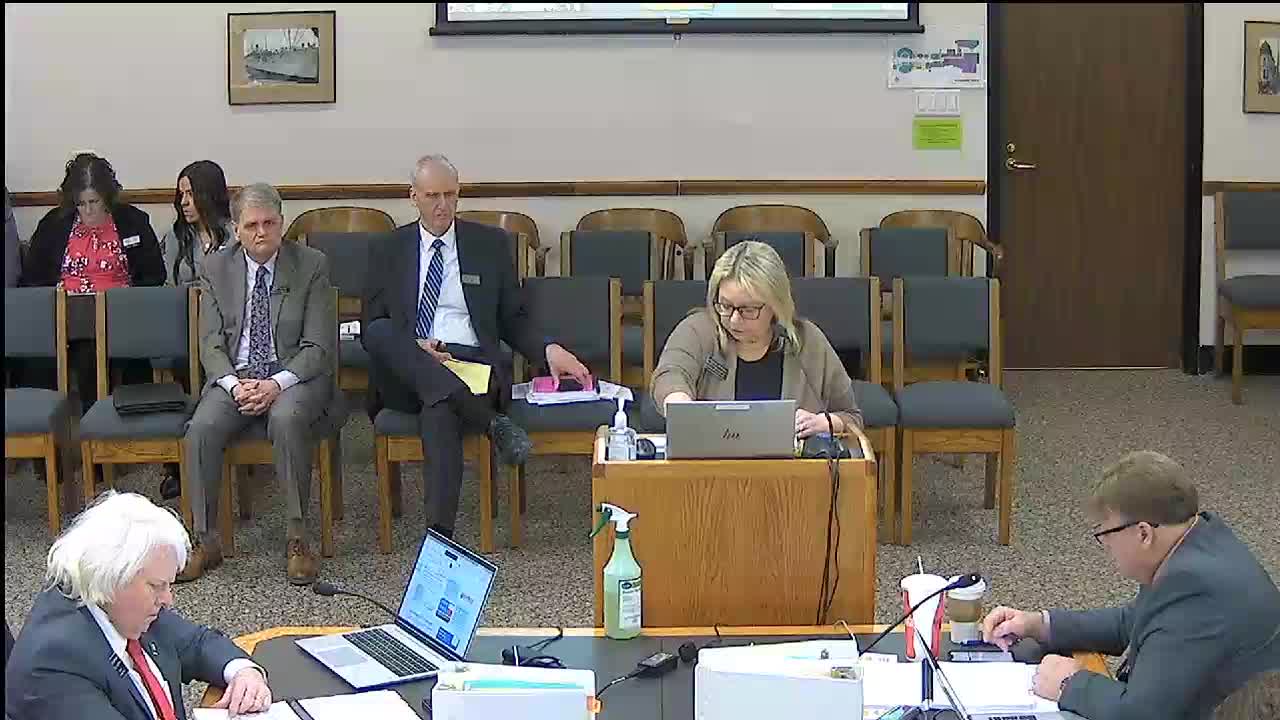
The House Appropriations Committee received a detailed accounting of the Health and Human Services budget, with fiscal staff saying the department remains the largest general fund expenditure and that Medicaid growth is concentrated in developmental disabilities, nursing homes and home- and community-based services.
Sheila Sandness, senior fiscal analyst with Legislative Council, told the committee that the Burgum executive recommendation increases general fund appropriations for the Department of Health and Human Services by roughly 15.5 percent, reflecting $176.2 million in added general-fund costs offset in part by a $123 million reduction in federal funds in areas that were elevated during the COVID era.
Nut graf: The session highlighted the interaction of federal matching rates (FMAP), Medicaid caseload changes, and state policy choices. Staff emphasized FMAP’s outsized influence on state dollars, and the executive recommendation’s increased spending for home- and community-based services and a planning allocation for a new state hospital.
Sandness and Alan Knudson walked members through the department’s program drivers. Knudson summarized the Medicaid funding mix and said the federal medical assistance percentage (FMAP) for North Dakota was estimated at about 50.99 percent for 2026, and that final preliminary FMAP numbers for 2027 should be available in April. “During COVID years, the federal government paid a greater share,” he said, noting an enhanced FMAP then that has since ended.
Committee members asked for more data. Representative Murphy asked about how FMAP is calculated and whether reduced oil activity and state personal income could increase the state’s FMAP share; Knudson explained FMAP is determined by state personal income relative to the rest of the nation and that changes of a single percentage point can cost tens of millions of dollars.
The presentations also noted program-level shifts: Burgum’s recommendation increases funding for home- and community-based services substantially, reflecting litigation-driven requirements and efforts to keep recipients in community settings rather than institutions. Sandness flagged that the Burgum budget includes $10 million from the Strategic Investment and Improvements Fund (SIF) to “complete construction planning and design of a new state hospital” and authorizes pursuing a new North Dakota State Hospital under a public–private partnership in addition to previously appropriated SIF funds.
The committee discussed Medicaid expansion funding and enhanced FMAP rules for expansion populations: Knudson noted that expansion carries a higher federal match (around 90 percent), but members also noted that federal enhanced-match provisions have changed over time and may phase down. Knudson said human services reported a major turn back in the current biennium and that the Burgum budget estimated about $80 million in turn back for the department.
Ending: Fiscal staff told members they will provide more detailed FMAP and caseload numbers as updated federal estimates and the Armstrong executive summary become available, and that divisions should plan for updated human services figures late in session when the conference numbers and new FMAP estimates are set.