Get Full Government Meeting Transcripts, Videos, & Alerts Forever!
Get email alerts on the State Budget topic
No spam. Unsubscribe anytime.
Appropriations committee opens session with large beginning balance, two governors' budgets and new worksheets for members
Summary
Legislative fiscal staff told the House Appropriations Committee the state begins the budgeting cycle with a stronger-than-usual balance and two competing executive budgets. Staff outlined how members will use new base/exec/revised worksheets and weekly budget status reports to track decisions during the 2527 biennium.
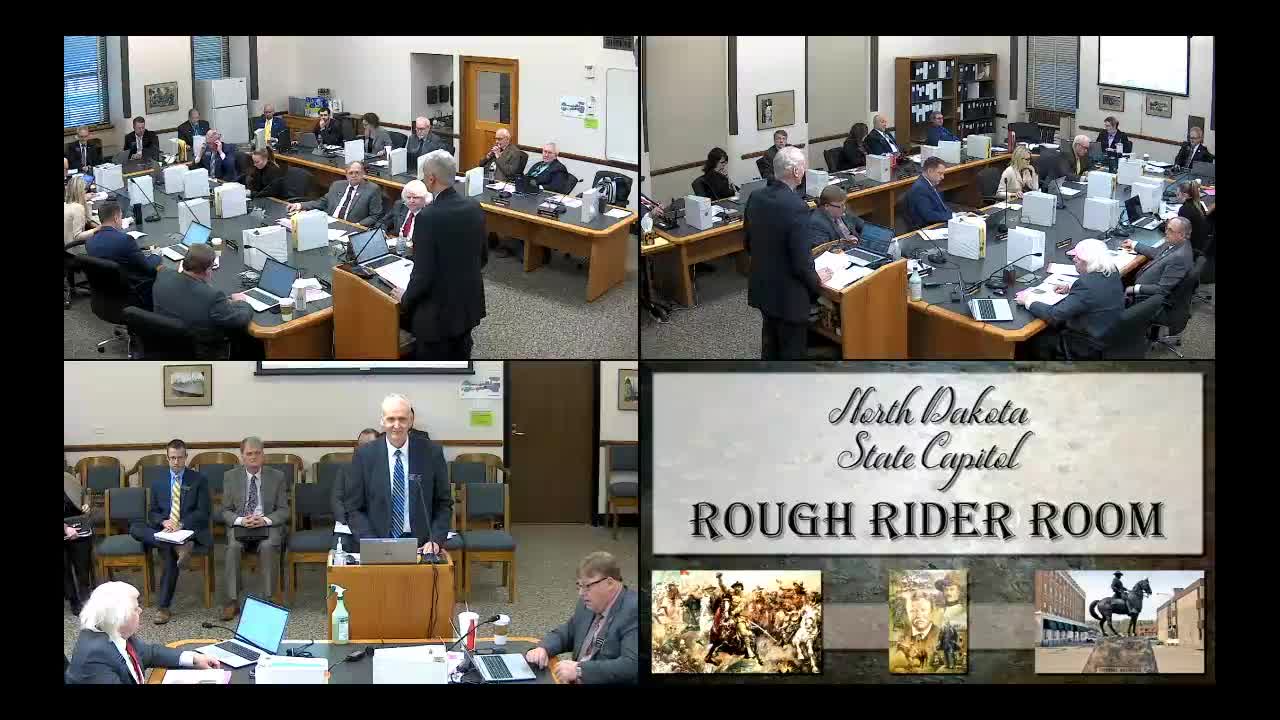
The House Appropriations Committee got its first briefing on the state budget process and revenue outlook as the session opened, with legislative fiscal staff saying the state enters the 2527 budgeting cycle with a substantially larger beginning balance and two executive budgets to compare.
For the record, Alan Knudson with Legislative Council staff told the committee that the state’s beginning balance “has been really healthy” since 2020 and that agencies’ unspent appropriations (“turn back”) are contributing to the cushion. Knudson said the governor’s executive recommendation for the upcoming biennium would move some money from the budget stabilization fund into the general fund and that agencies reported roughly $225 million in projected turn back that would increase the beginning balance.
The memo from fiscal staff matters because the committee must set spending against a revenue forecast. Knudson encouraged members to start from the prior biennium’s approved appropriations as the base point and then compare both Governor Burgum’s recommendation (already published) and the incoming Governor Armstrong summary, which the Office of Management and Budget (OMB) said it will deliver next week.
Nut graf: The staff presentation laid out both the arithmetic members will use and a procedural change in how committee amendments and explanatory documents will be provided — moving to a marked-up bill text accompanied by a separate statement of purpose for amendments — and introduced three comparison sheets for each agency (base, Burgum recommendation, Armstrong summary) that members will use as they amend bills.
Knudson and other fiscal staff described the new worksheets the committee will use: a blue “base” sheet showing the prior legislative base, a green sheet with the Burgum executive recommendation and a purple sheet to summarize Armstrong’s proposals once they are available. “Everything will be compared back to that base,” Knudson said, adding that the legislative fiscal team will prepare amendment language and a separate “statement of purpose of amendment” (SPA) that explains number changes.
Legislative fiscal staff also reviewed the major drivers of general fund revenues: sales and motor vehicle excise taxes, individual and corporate income taxes, and oil taxes. Knudson told the committee oil tax allocations previously set at $460 million in the Burgum recommendation were an option for members to reconsider; Burgum had suggested increasing that allocation to $600 million. He also highlighted that interest income and certain departmental collections are projected to decline relative to the prior biennium.
Adam Matiuk, revenue analyst, explained where members can find the detailed materials online and how the fiscal staff will post and update the “budget status report” each Wednesday to reflect legislative action. He walked members through agency-level pages (blue/green/purple sheets) and explained that the official amendment will be a marked-up bill text with the SPA attached as a separate document.
Members pressed staff on several items Knudson had emphasized: Representative Murphy asked about projected turn back for K–12, and Knudson noted the executive estimate of about $71 million in turn back for DPI, with a slightly different in-room recollection of about $65 million. Representative Nelson and others were briefed on the schedule for revenue forecasts: S&P Global will present a legislative revenue forecast in a joint hearing next week that the chambers will use to adopt a forecast for this session.
The committee was also warned to expect weekly fiscal-impact and budget-status updates from legislative fiscal staff, and that policy committees have a February 10 deadline for bills that include appropriations to clear policy committees and be available to appropriations. Knudson and Adam reiterated that fiscal staff will prepare amendments and the SPA and will answer technical or research requests if divisions or the full committee formally ask for major research projects.
Ending: Members were given contact points on the fiscal staff and shown how to find agency decision packages and historical appropriation data on the legislative and OMB websites. Knudson closed by urging division chairs to scrutinize FTE requests and the vacant-FTE pool as the session proceeds.