
Bill would split DEQ fee account to clarify who pays for water-system reviews
Get AI-powered insights, summaries, and transcripts
Subscribe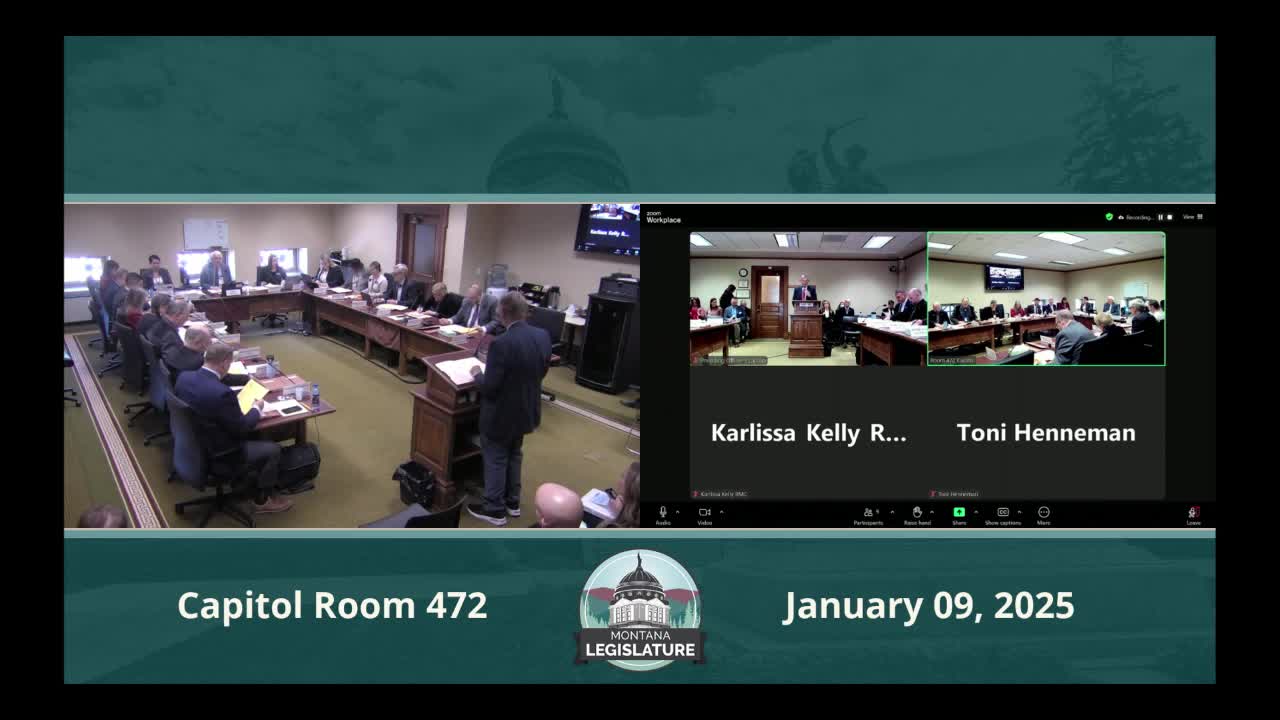
Summary
A brief Local Government Subcommittee hearing on House Bill 40 explained that the Department of Environmental Quality collects two distinct fees into one account; the bill would separate them so fees for public water system connection reviews and plan reviews are tracked separately.
Representative John Fitzpatrick, representing House District 76, presented House Bill 40 to the Local Government Subcommittee at a public hearing, saying the bill would split a single Department of Environmental Quality fee account used for two separate program areas into two accounts to improve transparency and prevent cross-subsidization.
The measure targets two specific revenue sources now deposited to the same account: the public water system connection fee, typically paid by local governments expanding water systems, and a plan-review fee often used for subdivision or community system reviews. "This bill is a good idea. It promotes a little bit more transparency in how state money ... is collected," Fitzpatrick said during his opening remarks.
Sonya Nowakowski, director of the Department of Environmental Quality, told the committee that separating the accounts will allow DEQ to analyze each stream of revenue independently and better evaluate whether fee changes are necessary. "By splitting these accounts, this will allow us to be more fiscally responsible to analyze what's happening with these both of these accounts," Nowakowski said, and she added the agency would be better prepared to return to the Legislature with any fee-structure changes in 2027.
Lindsey Kravaruchka, Water Quality Division administrator, provided a one-page handout to illustrate the current arrangement and said the bill is straightforward. Ben Rigby, executive director of Montana Real Water, a membership organization for small rural systems, told the panel the split would help small towns by making clearer where collected fees are spent.
No opponents or informational witnesses spoke in opposition, and the committee asked no follow-up questions before the sponsor closed. The hearing record lists proponents from DEQ and representatives of small-system interests; no formal committee action on the bill was recorded at this meeting.