
Bill seeks tougher penalties when tampering with bodies prevents determination of homicide
Get AI-powered insights, summaries, and transcripts
Subscribe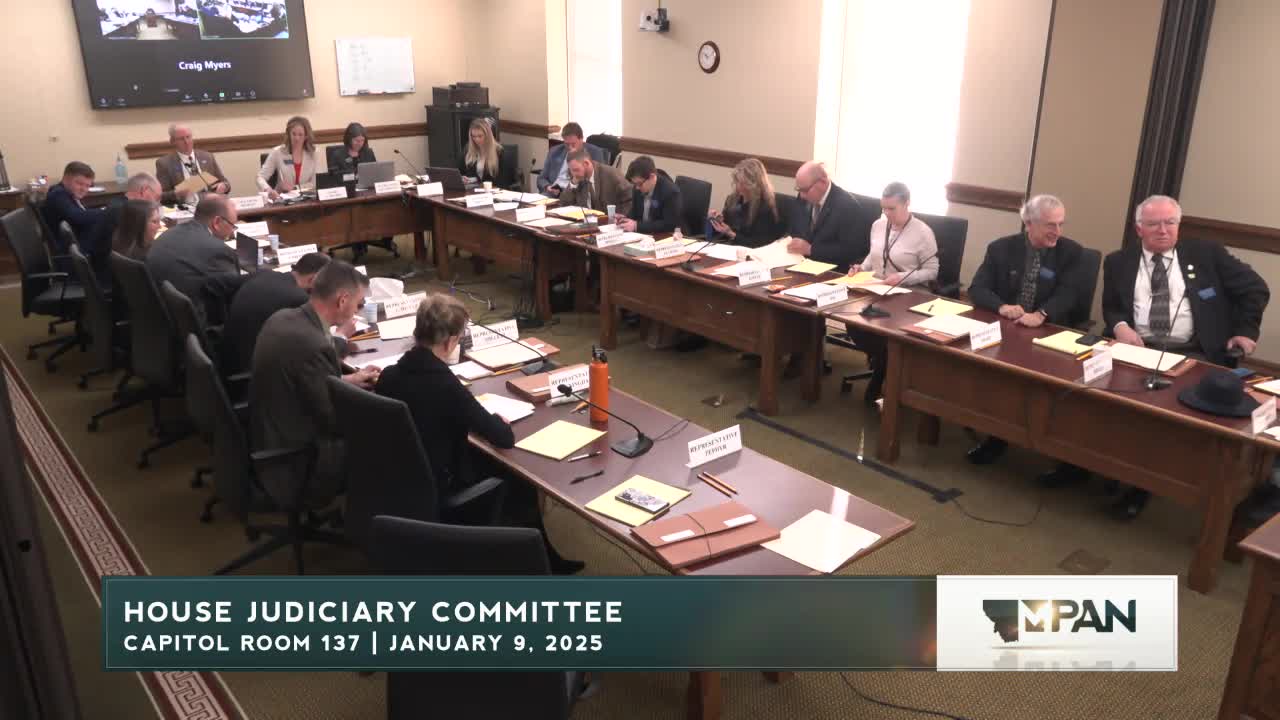
Summary
Representative Denise Baum introduced House Bill 44 to increase penalties for tampering with or fabricating physical evidence when the conduct affects a medical examiner's ability to determine cause of death; sponsors said the change would address cases where bodies are concealed or destroyed and homicide charges cannot be proven.
Representative Denise Baum (House District 45) opened a hearing on House Bill 44, a county-attorney-request bill that would increase penalties when someone tampers with or fabricates physical evidence in a homicide or homicide investigation and that tampering impairs a medical examiner's ability to determine cause of death.
Baum described a publicized Yellowstone County case in which a victim was severely injured, then the body was placed in a suitcase, dismembered and burned in a rural location in an attempt to conceal the crime. Because the remains had been altered, the medical examiner could not determine cause of death and prosecutors could not file deliberate-homicide charges, Baum said; those involved were prosecuted for tampering with evidence under the existing statute, which carries a maximum 10-year penalty.
Proponents — including the Montana Police Protective Association, the Montana Sheriffs and Peace Officers Association and Yellowstone County criminal deputy Ed Zink (testifying on behalf of the county attorney) — told the committee the proposed penalty (up to 40 years and/or a $100,000 fine) is an appropriate response to conduct that frustrates homicide investigations and inflicts additional harm on victims' families. Zink said the change fills a gap that can otherwise allow people to succeed in a "calculus" of disposing of a body to avoid homicide charges.
An amendment to include the coroner as well as the medical examiner was noted; the transcript records proponents and no opponents in the excerpt. Representative Baum asked the committee to pass the bill; no committee vote is recorded in the provided transcript.