
Bill would require periodic review, public database of tax-exempt properties
Get AI-powered insights, summaries, and transcripts
Subscribe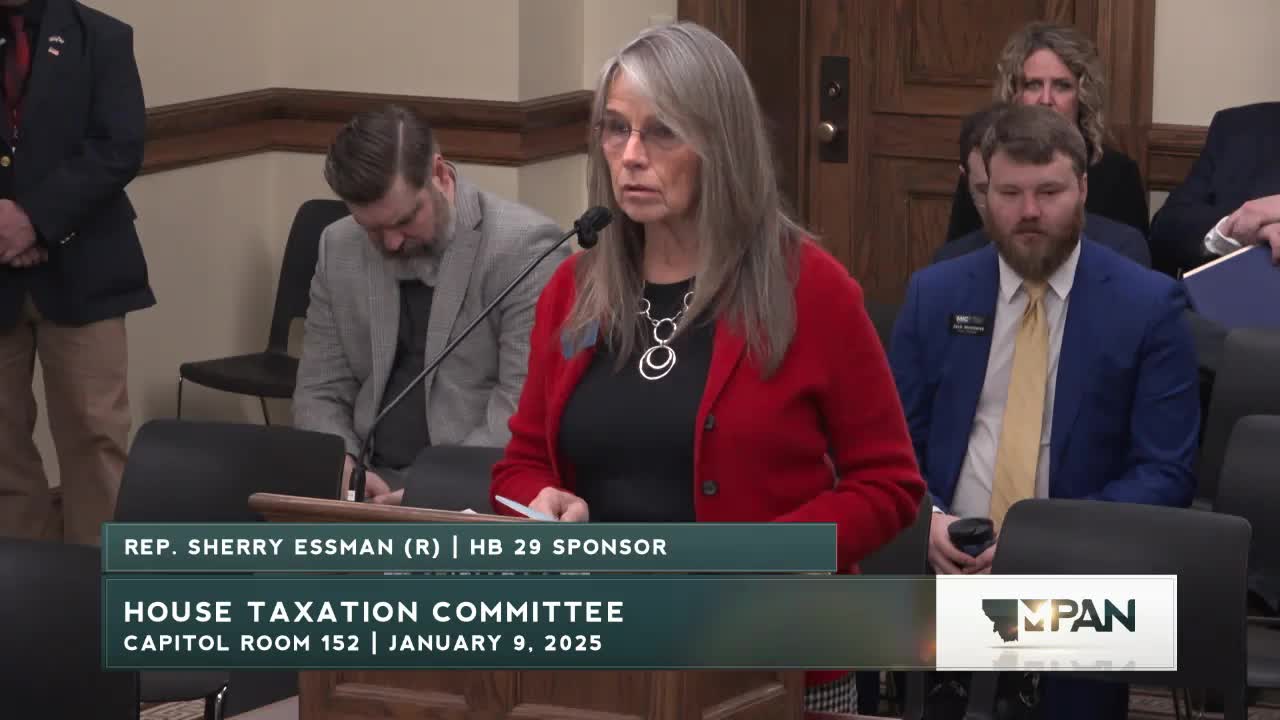
Summary
HB29 would direct the Department of Revenue to periodically review locally exempt properties (every eight years) and maintain a public database; supporters cited audit findings that prior reapplication discovered nearly 400 improperly exempt parcels.
House Bill 29 would require the Department of Revenue to periodically review properties that claim property tax exemptions and maintain a public database listing exempt parcels, supporters and informational witnesses told the House Taxation Committee.
Sponsor Representative Sherry Essman said the bill implements Recommendation 6 of the Legislative Audit Division’s review of property tax exemptions and continues work begun under House Bill 389 (2015), which required a one-time reapplication of exemptions. "This bill is recommending that the DOR review these tax exempt properties every 8 years," Essman said.
Bob Story of the Montana Taxpayers Association supported the bill, saying small nonprofits often lack up‑to‑date contacts and that periodic review will help the department locate owners. David Singer, management and program analyst with the Legislative Audit Division, told the committee the recommendation came from the audit and that the division had weighed costs and benefits between broad and targeted approaches. Robin Rude, deputy administrator of the Department of Revenue’s Property Assessment Division, said the department plans to streamline renewals via online applications and noted the state already offers public information at property.mt.gov and a cadastral map that can display exempt parcels.
Committee members asked for operational details. Rude said the 2015 reapplication effort took several years to complete and resulted in about "just under 400" properties being denied exemption. She said the department intends to avoid repeating a multi‑year manual reapplication and instead perform periodic targeted reviews supported by the online tool. Rude also told lawmakers that if an owner fails to submit documentation or a timely application, the property could become taxable and that an appeal process would remain available.
Why it matters: proponents framed HB29 as a way to ensure exempt property classifications remain current and to preserve fairness in the property tax base by identifying parcels no longer meeting exemption criteria.
No formal committee vote was taken at the hearing.