Get Full Government Meeting Transcripts, Videos, & Alerts Forever!
Get email alerts on the Property Taxes topic
No spam. Unsubscribe anytime.
DeSantis, state auditors cite local 'wasteful' spending, push property-tax overhaul for Florida homeowners
Summary
Gov. Ron DeSantis and Florida Chief Financial Officer Blaze Ingolia unveiled findings from state fiscal oversight audits they say show billions in local government overspending and announced plans to pursue a ballot measure to shield homesteaded primary residences from much of the property-tax burden in November 2026.
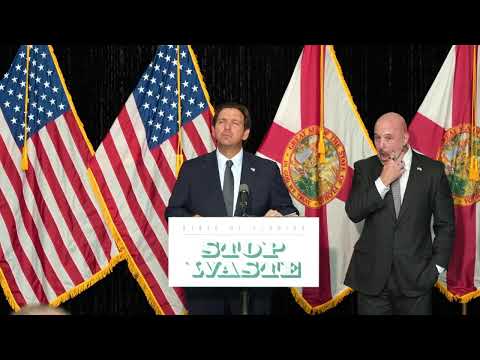
Gov. Ron DeSantis, governor of Florida, used an event at Jacksonville to highlight statewide audits by a newly described Florida Agency for Fiscal Oversight (FAFO) and to press for a constitutional change to reduce property-tax burdens on Florida homeowners.
"Nobody that I've talked to is really complaining about taxes at the state level," DeSantis said, arguing the state has cut taxes and reduced debt while local property-tax assessments have risen and pushed homeowners to sell. He urged the Legislature to approve placing a proposal on the ballot so voters can decide in November 2026.
The nut of the announcement: the state has been running FAFO audits of local governments and — the governor said — will publish findings showing "wasteful and excessive" spending that, the administration contends, could be reduced back to pre‑COVID budget levels. Blaze Ingolia, identified in the meeting as Florida's chief financial officer, described the methodology as comparing current budgets to indexed 2019 levels (adjusting for inflation, population and other factors) and then identifying excess. "We think that they are excessively spending and wastefully spending to the tune of billions of dollars," Ingolia said.
The office presented county-level examples during remarks. Figures cited by Ingolia included estimates of roughly $190 million in excess for Orange County, $199 million for Jacksonville, $84 million for Alachua County and $189 million for Broward County; the CFO said the total for those five counties approaches $1 billion. Ingolia said those are examples from public budgets and that the total statewide overage could be many billions more once all municipalities and counties are reviewed.
Both DeSantis and Ingolia framed the proposed ballot approach as narrowly targeted at homesteaded primary residences. "I'm focusing on the Florida resident," DeSantis said, adding that commercial properties and seasonal/snowbird properties would remain taxable and that protecting homesteads should be a priority. He said the proposal will require the Legislature to first approve placing the measure on the ballot by the two‑thirds vote needed under state rules and then require 60% voter approval.
Ingolia offered a series of specific, sometimes pointed examples of programs the administration characterized as wasteful, including a $75,000 hologram at Jacksonville Airport, a poet‑laureate program and taxpayer‑funded hot yoga for city employees. "These egregious examples of wasteful spending are rising," Ingolia said. The governor and CFO said the audits will also highlight local programs they view as discretionary or outside core public safety and infrastructure functions.
DeSantis said the state will publish FAFO findings beyond local governments and noted audits of state universities and some state agencies are forthcoming. "We're gonna be rolling out some findings on the state universities very soon," he said.
On questions about implementation and timing, DeSantis said officials are drafting precise language and numbers and aim to have a proposal that both the Legislature and voters will approve. He described the process as both "an art and a science," saying prior ballot measures failed in part because their text was not clear to ordinary voters. He repeated that the initiative would not likely appear before November 2026 because of the legislative thresholds and calendar unless the Legislature agreed to a special session.
The event also included a brief exchange about state immigration facilities and federal reimbursements. Asked whether a federal shutdown would slow reimbursement for state spending on immigration facilities, DeSantis said officials expect reimbursement and that federal agencies already have issued some payments. "Tens of millions of dollars already," he said, adding the state expects further federal funds as the issue is considered essential work.
The administration said the FAFO work will identify places that do a good job as well as places it judges to be overspending; DeSantis said well‑run jurisdictions will be publicly recognized. He urged local officials and voters to consider the audits' findings as the basis for tax and budget decisions.
What happens next: the administration said it will continue releasing audit findings, refine the ballot language with legislative partners and press to get a two‑thirds legislative vote to put the proposed homestead relief on the November 2026 ballot. No formal legislation or ballot language was released at the Jacksonville event, and no formal vote or executive action on the proposal was taken at the meeting.