Get Full Government Meeting Transcripts, Videos, & Alerts Forever!
Get email alerts on the Professional Discipline topic
No spam. Unsubscribe anytime.
Connecticut hearing opens on nurse accused of diverting patient medications; drug-control agent testifies about medications found in car
Summary
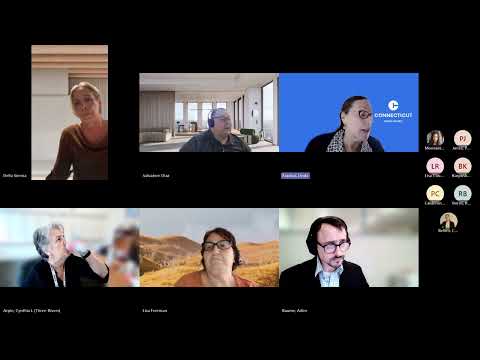
A panel of the Connecticut Board of Examiners for Nursing on Oct. 14, 2025 opened a disciplinary hearing on petition No. 2024-1378 against registered nurse Estelia Sienna, license E58077, on allegations that she diverted medications from home-health patients, failed to keep and dispose of medications securely, and exposed patient information.
A panel of the Connecticut Board of Examiners for Nursing on Oct. 14, 2025 opened a disciplinary hearing on petition No. 2024-1378 against registered nurse Estelia Sienna, license E58077, on allegations that she diverted medications from home-health patients, failed to keep and dispose of medications securely, and exposed patient information.
Hearing-office attorney Aden Baum, who is advising the panel on law and procedure, told the panel and participants that "the department bears the burden of proving the allegations in the statement of charges by a preponderance of the evidence. That means more likely than not." The respondent, who said she was proceeding pro se, answered the statement of charges paragraph by paragraph on the record.
The Department of Public Health presented documentary exhibits, some pages of which the panel sealed as containing protected medical information. Department counsel said the department will call Pamela Jones of the Department of Consumer Protection’s Drug Control Division to describe her investigation and the medications recovered from the respondent’s vehicle following a Jan. 6, 2025 interview and voluntary search.
Pamela Jones, who identified herself as a drug control agent, testified that the division first received an anonymous complaint in September 2024. The complainant later identified himself to investigators and surrendered an initial set of about 14 prescription vials. Jones said her subsequent meeting with the employer and a Jan. 6, 2025 meeting with Sienna led to a voluntary search of Sienna’s car.
Jones testified that officers and the respondent together removed prescription vials from the trunk, passenger door pocket, center console and rear seat; she said investigators found prescription vials dated from 2021 through 2024 and inventoried roughly "about 30, 36 or more" patient-specific prescription vials. Jones said some bottles contained controlled substances and that the bottles bore patients’ full names, dates of birth, addresses, pharmacy names and serial numbers. "There was a lot of medications in here. It did look like diversion," Jones testified. She later said there was "no reasonable excuse" for retaining that quantity of patient-specific medication vials in a nurse’s car over a multiyear period given the employer’s policies.
Department counsel told the panel the department would ask that Sienna’s license be revoked, citing the quantity of medications recovered and the risk to patients. Sienna denied the diversion allegations in her opening statement and said the bottles in her car were expired or outdated medications awaiting disposal. Speaking in the hearing, Sienna said she had worked in visiting nursing for about 33 years and described family upheaval, including a house fire and a protective order against a nephew she said was involved in the complaints. "I do not think that my car was a mobile pharmacy," Sienna said. She also said she intended to dispose of outdated medications and that she had been a wound-care specialist who had worked to prevent hospital readmissions.
The panel admitted multiple exhibits into the record. The panel voted to admit one respondent character reference (Respondent Exhibit E); the motion was made by panelist Lisa (recorded in the transcript as Lisa Freeman) and seconded by Sal; Lisa, Sal and Cindy Arpin voted yes and the motion carried. The hearing officer placed several documents or pages under seal to protect medical and personnel information, and the panel moved to reserve specific investigative details for a closed, executive-session discussion of sealed material.
No final disciplinary decision was reached at the hearing; the panel announced it will consider sealed portions of the drug-control report and other sealed exhibits in executive session and prepare proposed findings of fact and conclusions of law for the full Board of Examiners for Nursing to decide.
The hearing record shows that the Department will present additional sealed evidence and that the panel planned an executive-session review with the members, the respondent and counsel as appropriate before proceeding further.