
DEQ-backed bill would modernize state building energy program, repeal unused bonding authority
Get AI-powered insights, summaries, and transcripts
Subscribe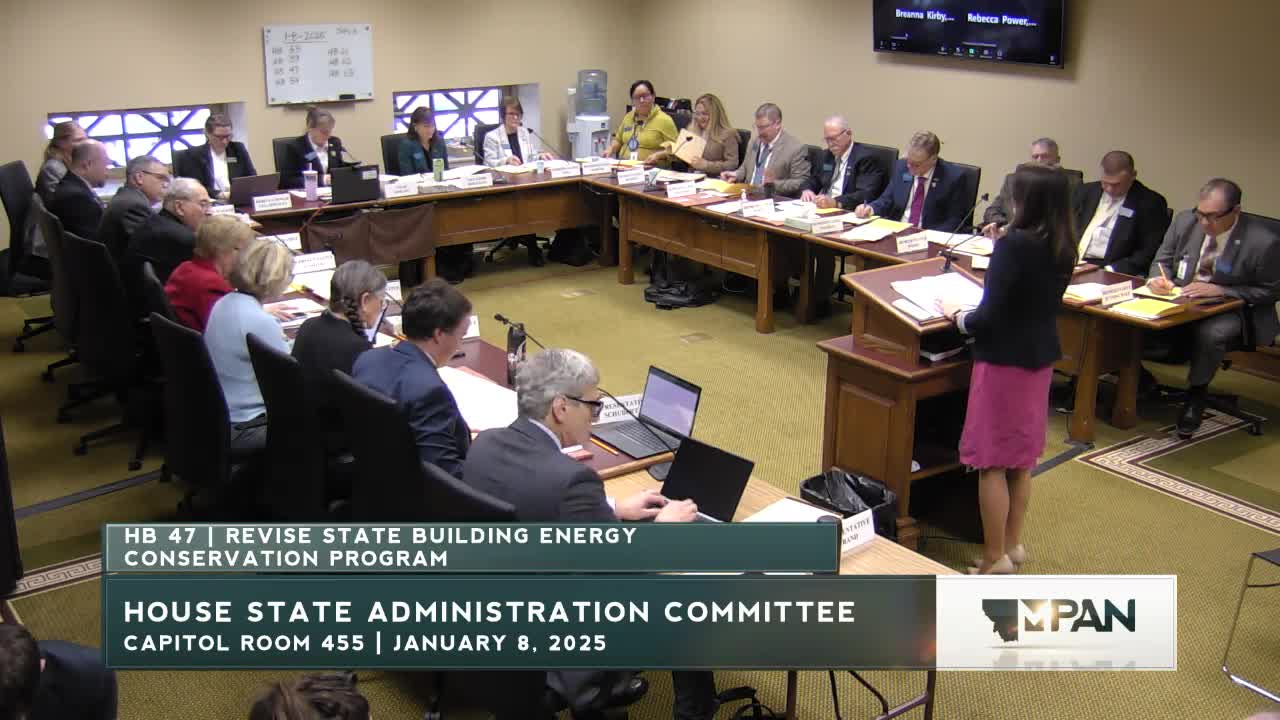
Summary
House Bill 47 would remove an unused bonding authority from the State Building and Energy Conservation Program, let the Department of Environmental Quality set an interest rate up to 3 percent, and widen eligible project language to include operation and maintenance savings. DEQ and supporters said the changes would increase taxpayer savings and
Majority Leader Zollincoff presented House Bill 47 at the request of the Department of Environmental Quality. The measure would: repeal DEQ's unused bonding authority for the State Building and Energy Conservation Program, allow the department to set an annual interest rate up to the current 3 percent cap instead of a fixed 3 percent, and update eligible project language to account for utility‑associated operation and maintenance (O&M) savings.
DEQ Director Sonya Nowakowski told the committee the program has invested about $40 million in nearly 200 projects since 2009, yielding estimated annual taxpayer savings of about $2.6 million; the bill's cleanups would enable additional savings and better project delivery. "This cleanup actually allows us to save even more," Nowakowski said.
Ben Brouwer, DEQ Energy Bureau chief, explained the interest‑rate change would permit DEQ to set a rate that covers administrative costs without exceeding 3 percent, and the expanded definition of energy conservation would allow projects that reduce maintenance and operating costs to be included when calculating payback periods. He said repeal of the long‑unused bonding authority merely removes obsolete code and would not reduce program capital.
The Montana Renewable Energy Association supported the bill, calling it "well thought out" and emphasizing taxpayer savings. Architecture and Engineering Division administrator Russ Katherman and Department of Administration staff were present as informational witnesses to discuss implementation.
No opponents appeared in the hearing record and the sponsor asked for the bill's passage. No committee vote is recorded in the transcript.
Next steps: HB 47 will proceed toward executive action if the committee so votes; agencies will work with DEQ on implementation details if the bill advances.