Get Full Government Meeting Transcripts, Videos, & Alerts Forever!
Get email alerts on the Special Districts Accountability topic
No spam. Unsubscribe anytime.
House Local Government Committee hears bill to let residents seek court orders against failing special-district boards
Summary
The House Local Government Committee heard testimony on House Bill 68, which would let residents and local governments seek writs of mandamus to compel special-district boards to perform legal duties; no committee vote was taken.
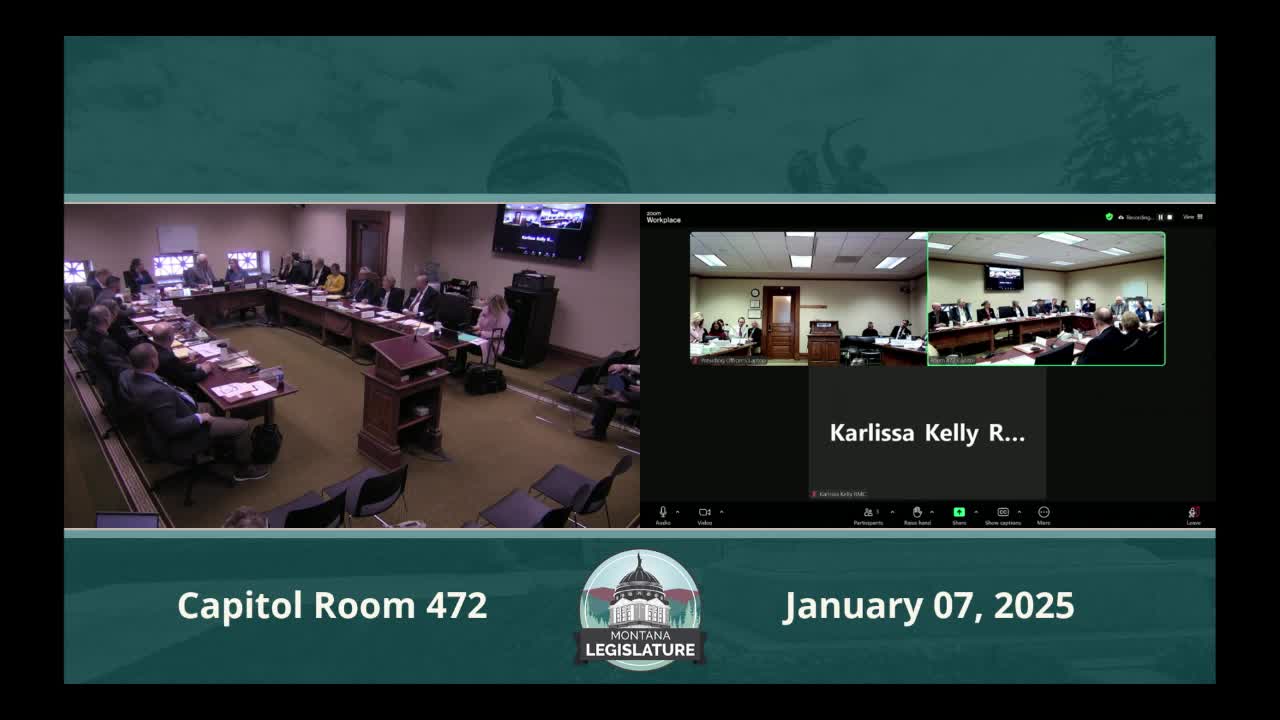
The House Local Government Committee in Helena on Tuesday heard public testimony on House Bill 68, a measure sponsored by Representative Steve Gist that would create a legal path for residents to seek court orders against special-district boards that fail to perform duties required under state law.
Representative Steve Gist, sponsor of the bill, told the committee the proposal “started in this room about 4 years ago” after recurring complaints about publicly funded boards that failed to post minutes, give public notice or otherwise follow Montana law. “When the county commissioner set up a board and fund it, they have no more say over that board,” Gist said, describing the problem HB 68 aims to address.
The bill narrows its scope to special districts. Committee staff member Tony Henneman explained the draft’s definition of “local government entity” is intended to capture “those special districts that are able to raise revenue or receive, disperse, or expend local, state or federal government revenue for the purpose of serving the general public” and to exclude cities, towns, consolidated city-counties and school districts.
Gist and others described the measure’s genesis and legislative history: the proposal began as House Bill 694, later was split in the interim into companion measures (House Bill 32 and House Bill 33) and was revised after prior floor or governor’s office concerns. The current bill text includes a writ-of-mandamus mechanism. As Gist read to the committee, a writ of mandamus is “a court order that compels a government official or an entity to perform a legal duty or refrain from doing an illegal activity.”
One portion of the current draft clarifies when courts may award attorney fees. Gist noted the language allows a court—not an automatic statutory award—to determine whether county commissioners may recover reasonable attorney fees and costs if they litigate to obtain a writ of mandamus on behalf of their constituents.
Committee members asked clarifying questions about the bill’s definitions and scope. Vice Chair Ed Staffman said he wanted to better understand “the problem it’s trying to solve,” and Gist described how residents currently often have no timely local remedy when a special district’s board is unresponsive. Henneman pointed to specific lines in the draft that narrow the bill to special districts and explained where the writ language appears.
No vote was taken; the sponsor asked the committee for a “do pass” recommendation but the meeting moved to close the hearing and defer executive action to a later date. Committee members said executive action would be scheduled at a subsequent meeting.
The bill would apply statewide to entities meeting the bill’s definition; Gist emphasized the intent is to keep disputes at the local level by giving residents and local governments a clear, time‑limited legal remedy rather than letting problems fester.
Representative Gist concluded by asking the committee for a favourable recommendation; the committee closed the public hearing with no further testimony and indicated it will consider executive action at a future meeting.