Get Full Government Meeting Transcripts, Videos, & Alerts Forever!
Get email alerts on the State Bar Appearance topic
No spam. Unsubscribe anytime.
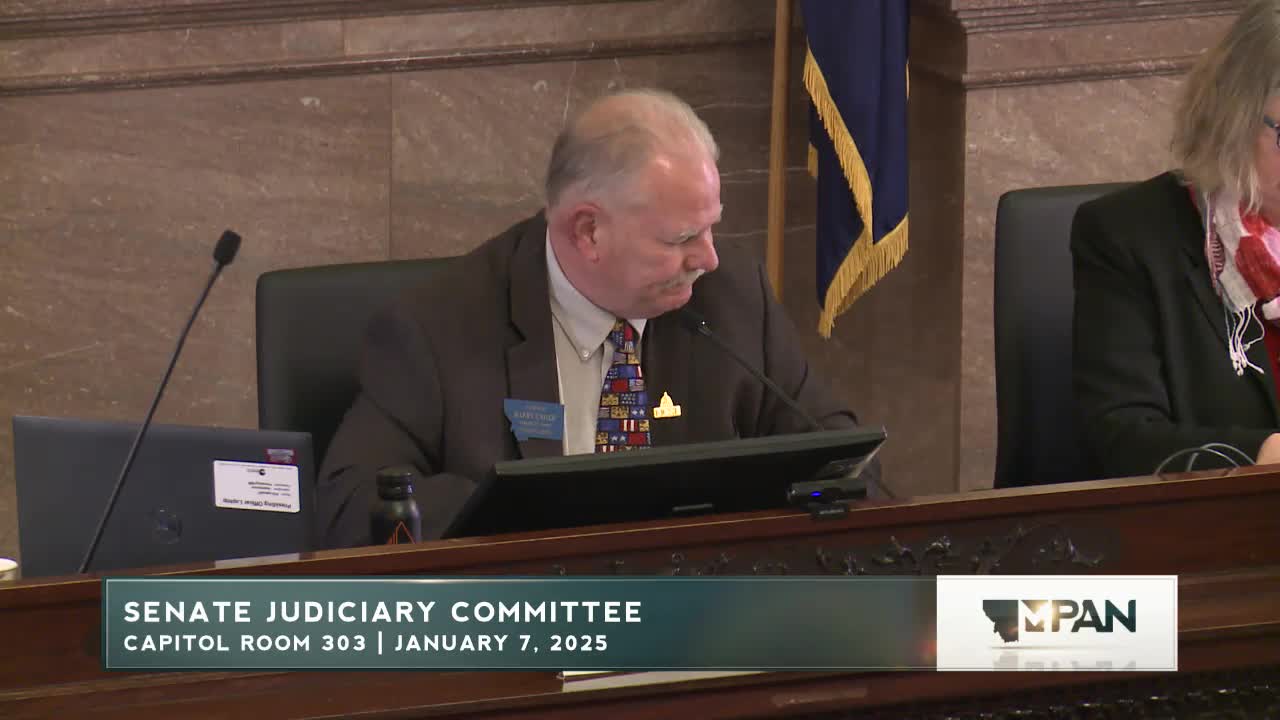
State Bar president defends bar structure, CLE policy before Montana Senate Judiciary Committee
Summary
Toni Teas, president of the State Bar of Montana, appeared by Zoom to respond to a December 23 letter from senators about remarks at an April CLE event; she said disciplinary matters are handled by the Office of Disciplinary Counsel and emphasized the bar’s limitations and funding model.
Toni Teas, president of the State Bar of Montana, appeared by Zoom before the Senate Judiciary Committee to respond to a December 23 letter from senators seeking answers about remarks made at an April continuing legal-education event.
Teas told the committee she appeared voluntarily and that she drafted the State Bar’s January 6 response to the December 23 letter. She said the State Bar is not involved in or in control of attorney disciplinary proceedings, which are handled by the Office of Disciplinary Counsel (ODC) and governed by confidentiality rules. Teas said disciplinary matters are treated as confidential under disciplinary rule 20 and that the State Bar cannot comment on matters that have been referred to ODC.
The exchange began after Senator John Fuller said he wrote the December 23 letter seeking a formal response about comments at the April CLE program; Fuller said a member of the event panel made remarks he found objectionable, and he asked the State Bar to answer for those remarks. Teas said the State Bar regretted that comments occurred at the event and that a prior bar president had spoken with the lieutenant governor to express regret; she declined to offer specifics about disciplinary investigations, saying the bar does not control those proceedings.
Committee members pressed Teas for details about the State Bar’s relationship to the Montana Supreme Court and its governance. Teas explained that the bar is a unified, mandatory bar that is self-funded through member dues and was unified by order of the Montana Supreme Court in the 1970s. She said the bar’s board of trustees is elected from geographic areas, the executive committee typically votes on bar positions, and that Keller v. State Bar of Montana guides how a mandatory bar may use dues for legislative activity. She also described a member refund process for pro rata portions of dues spent on lobbying when members disagree with the bar’s positions.
Senators asked whether the bar issued apologies for certain remarks and questioned whether the bar treats criticisms of the judiciary differently from other criticisms. Teas repeatedly said she could not comment on disciplinary matters and noted rule 8.2 of the Rules of Professional Conduct, which prohibits statements made with knowledge they are false or made with reckless disregard for the truth concerning the integrity of a judge or judicial candidate. She cited public statements by U.S. Chief Justice John Roberts about the line between legitimate criticism and threats or intimidation of the judiciary.
Senator Andrea Olsen objected earlier in the meeting to the committee’s plan to invite a bar representative, saying the invitation risked chilling free speech and amounted to calling a citizen or organization to answer for critics’ remarks. Chairman Usher responded that the invitation was voluntary and said the subject related to bills expected before the committee.
Senator Fuller told the committee he received threatening letters after the event and said he had been advised not to expand on specifics at the hearing. Several senators urged the committee to stay focused on the written letters and the bar’s response; other members called for hypothetical questions to avoid discussing confidential matters.
No formal action was taken against the State Bar; the appearance was recorded as part of the committee’s informational business for the organizational meeting.
Why it matters: The exchange touches on questions about the scope of speech at professional events, the boundaries between bar association activities and disciplinary enforcement, and Keller-related limits on mandatory-bar lobbying and dues use — issues that intersect with pending and possible legislation about bar governance and professional regulation.