Get Full Government Meeting Transcripts, Videos, & Alerts Forever!
Get email alerts on the Committee Procedure topic
No spam. Unsubscribe anytime.
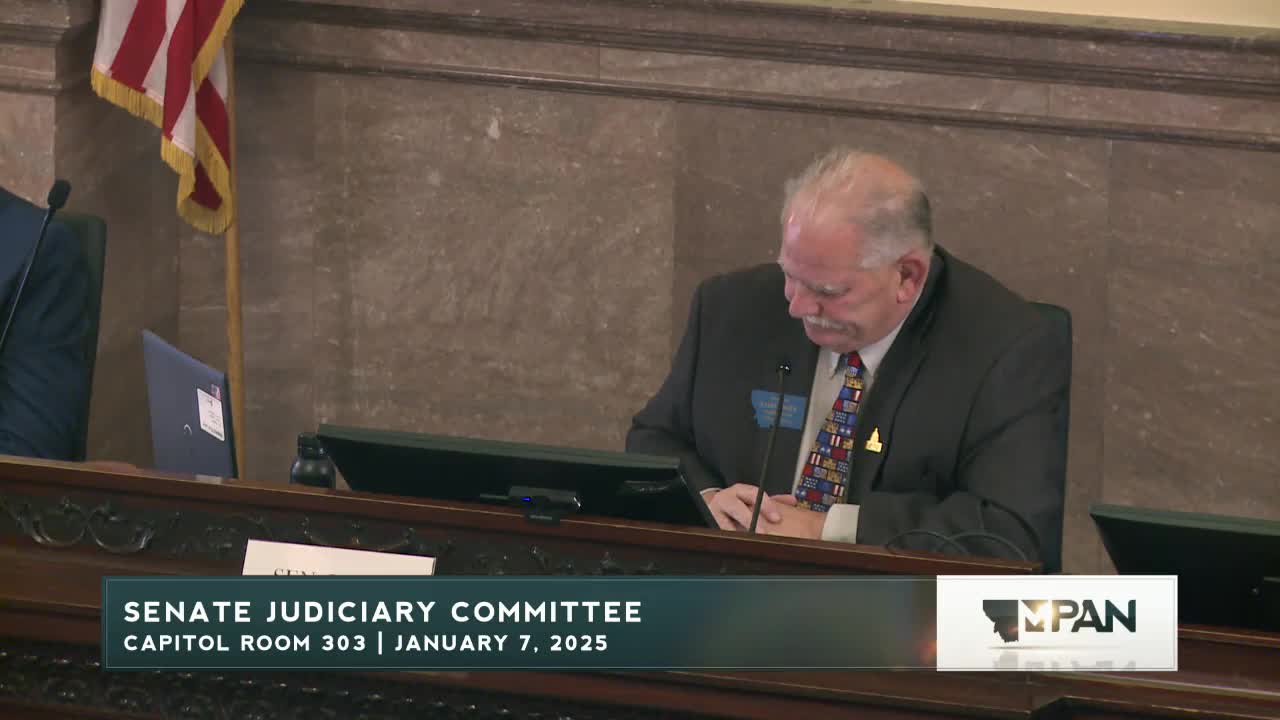
Senate Judiciary Committee adopts proxy procedure, sets limits on testimony and amendments
Summary
The Montana Senate Judiciary Committee voted unanimously to adopt an established proxy procedure and outlined administrative rules for hearings, amendments and remote participation at its 2025 organizational meeting.
The Montana Senate Judiciary Committee voted unanimously to accept a standing proxy procedure and set rules for testimony, amendment requests and remote participation during its organizational meeting for the 2025 session.
Chairman Barry Usher opened the session and, after staff briefings, the committee considered a motion from Senator Theresa Mansella to use proxies according to prior precedent. Mansella moved that the committee “utilize the proxies in the manner that we have set into prior precedents.” The motion passed by unanimous voice vote.
The proxy process described on the record requires members to sign multiple proxies and places daily custody primarily with vice chairs. Committee staff attorney Julianne Burkhart told members that each senator typically signs at least six proxies and vice chairs maintain a supply; when a vice chair has a conflict, that vice chair designates another caucus member to hold proxies for that meeting. Chair Usher said he prefers to allow proxies because members attend many committees and other obligations.
Committee staff outlined administrative rules to manage the heavy bill load. Usher said the committee already had 29 prefiled bills in its queue and that he expects a large workload. Burkhart said she will be the committee’s primary amendment drafter but asked senators to give her 24 hours’ notice for requested amendments so editing and production pipelines can prepare amendment paperwork. Secretary Grace Gibney said she will post each day’s hearing and executive-action order on the committee whiteboard and will record votes and minutes; she said the committee will generally not accept “virtual” or on-the-fly amendments except for minor grammatical fixes.
Other procedural points put on the record included: a three-question limit for committee members during hearings, a three-minute guideline for proponents and opponents (subject to chair discretion and exceptions for recognized experts), one discretionary postponement per bill on the whiteboard during a meeting to allow drafting work, and a requirement that remote witnesses sign up no later than two hours before a hearing to be placed on the committee Zoom roster. Usher also described new microphone controls and a laptop-based Zoom queue the room will use to monitor and invite remote participants.
Burkhart said she will attend subcommittee meetings if requested, will draft committee bills, and will help connect senators with research and data resources. Gibney urged senators to keep bill folders provided on desks until executive action or the committee indicates otherwise; materials left off the desk may be recycled and can be difficult to retrieve later.
The committee adjourned at the close of the session; Senator Andrea Olsen made a motion to adjourn that the chair accepted and the committee recessed until its next scheduled meeting.
Why it matters: The committee’s proxy rules, limits on testimony and strict amendment timeline are intended to help the Judiciary Committee manage a large docket and move bills efficiently. The administrative decisions also affect how constituents and stakeholders will engage with hearings and the timeframe for submitting amendments.