Get Full Government Meeting Transcripts, Videos, & Alerts Forever!
Get email alerts on the Cultural Arts Grants topic
No spam. Unsubscribe anytime.
Committee hears House Bill 9 to fund cultural and arts grants statewide
Summary
The House Long‑Range Planning Subcommittee F heard testimony on House Bill 9, which would allocate cultural trust interest earnings for grants to arts and cultural organizations across Montana.
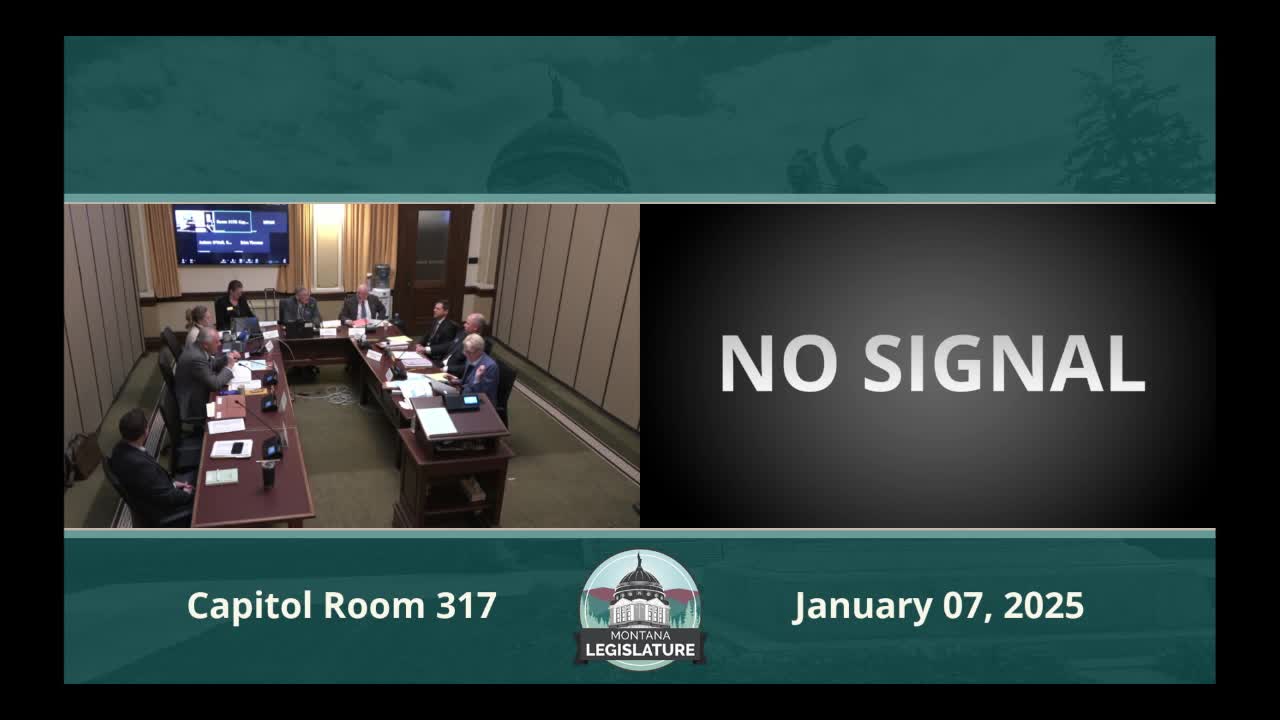
HELENA — The House Long‑Range Planning Subcommittee F on Thursday opened a hearing on House Bill 9, the biennial cultural and arts appropriation bill that would allocate interest‑earned trust funds for grants to arts and cultural organizations across Montana.
Representative John Fitzpatrick, sponsor of the bill and member of the subcommittee, told members that the bill lists 75 entities recommended for funding and that the Montana Arts Council administers the program on behalf of the legislature. "I am here today to present to you House Bill 9, which is the cultural and arts appropriation bill," Fitzpatrick said.
The bill would rely on interest earnings from the cultural trust to support grants rather than direct general fund appropriations. Erica Thomas, the committee’s fiscal analyst, told the panel the committee packet shows a total budget request for the 2027 biennium of $983,500 and that committee staff recommended awards totaling $953,500. Thomas also presented the administration and grants lines in the packet and noted that grants were shown at $476,750 for each fiscal year in the biennium and that administrative costs appear in the agency’s appropriation (House Bill 2).
Kristin Burgoyne, deputy director of the Montana Arts Council and the agency administrator for HB 9, outlined how the program operates and how awards are determined. "This program is funded by interest earned during the grant period," Burgoyne said, and she described an advisory review process staffed jointly by the arts council and the Montana Historical Society. Burgoyne said 76 applications were submitted for the current biennium and 75 were recommended by the advisory committee for awards.
Burgoyne and panel members discussed several program features intended to protect grantees and promote geographic equity. Because awards come from interest earnings, the bill contains mechanisms to reduce awards pro rata if interest is lower than predicted and to withhold the final 5% of a multi‑year award as a reimbursement after the end of the biennium. The advisory committee this cycle used criteria that gave additional consideration to projects in smaller communities and organizations with smaller budgets to help level the competition between larger, urban organizations and rural applicants.
Kris Holmes, executive director of the Montana Arts Council, described extensive outreach the agency conducted in the interim, including a statewide survey and staff site visits. "We got almost 900 responses from every county including tribal communities," Holmes said, a response she said the agency used to inform its strategic planning and outreach.
Committee members questioned staff and agency witnesses about how the arts council reaches rural communities, how statewide programs that are based in larger towns should be listed on the application, and the relationship between the cultural trust grants and other state programs. Burgoyne said the council conducts targeted outreach, leverages partnerships (including with the Historical Society), maintains in‑person contact where feasible, and provides application assistance to small organizations.
Members also asked about funding lines: Burgoyne reported that, per statute, $30,000 is allocated to the Montana Historical Society for maintenance of artworks in the Capitol. She said $446,351 for the biennium is routed to the arts council via House Bill 2 for agency administration. Fiscal staff noted administrative expenditures are shown as charges against the same trust fund in the committee tables so members can see the full effect on fund balances.
There was no opponent testimony on Thursday and no formal committee action. The subcommittee chair said that proponents would present on scheduled days and that the committee would accept testimony both in person and by Zoom. The panel also discussed scheduling a follow‑up internal review session to consider amendments after testimony is complete.
The hearing was informational; the committee did not vote on the bill Thursday. Additional testimony on HB 9 is scheduled on subsequent meeting days, and staff said they will circulate daily witness lists and application summaries to committee members.