Get Full Government Meeting Transcripts, Videos, & Alerts Forever!
Get email alerts on the Ethics And Campaign Finance topic
No spam. Unsubscribe anytime.
Commissioner of Political Practices outlines office enforcement approach, potential AI and compliance bills
Summary
Commissioner Chris Gallus briefed the committee on the functions and constraints of the Commissioner of Political Practices office, its complaint-driven enforcement model, orders of noncompliance, staffing and budget context, and possible future bills on artificial intelligence disclaimers and procedural streamlining for noncompliance orders.
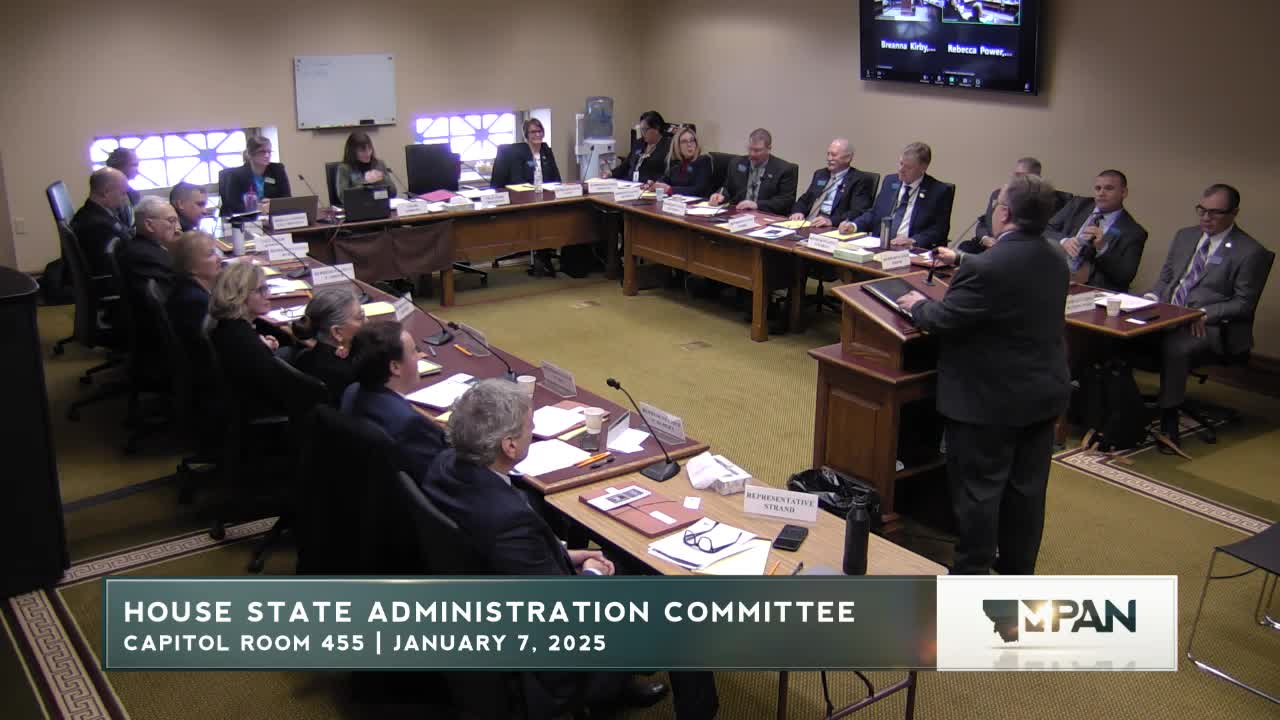
Commissioner Chris Gallus told the House State Administration Committee the Commissioner of Political Practices (COPP) remains a small, complaint‑driven agency whose primary focus is disclosure and transparency for campaign finance, lobbying and ethics filings.
"We exist fundamentally to gather information, maintain the information, [and] get it disseminated to the public with respect to contributions and expenditures to influence elections," Commissioner Gallus said, describing the office’s work in candidate and committee compliance assistance and investigations.
The commissioner said the office typically has seven staff and an approximate budget of $1.7 million (all appropriated in HB 2). He described enforcement as primarily complaint-driven, supplemented by an administrative tool called an "order of noncompliance" (statutory provisions cited in committee testimony) that the office can issue when filings are not corrected after outreach.
Why it matters: COPP enforces disclosure rules and ethics for statewide officials and lobbyists. Changes in reporting practice, enforcement tools or new statutory requirements for disclaimers (including concerns about artificial intelligence) could affect campaigns, lobbyists and statewide officials.
Details: Gallus summarized past training and outreach efforts across the state, the relatively low litigation burden in the last cycle, and a recent staffing change in which a previously one‑time funded attorney position was built into the base budget. He said fines and civil penalties collected by COPP are remitted to the general fund.
Possible legislation: Gallus said the office was not formally proposing agency bills but flagged areas he might bring forward: statutory adjustments for handling AI-related political communications and disclaimers; indexing lobbying thresholds to inflation (to avoid post‑election timing restrictions); and streamlining the order of noncompliance process to reduce procedural burdens.
Next steps: The commissioner offered to assist legislators with bill drafting and to appear on relevant measures, and he indicated COPP will continue training and compliance assistance across the state.