Get Full Government Meeting Transcripts, Videos, & Alerts Forever!
Get email alerts on the Committee Procedures topic
No spam. Unsubscribe anytime.
House Judiciary outlines amendment process, executive-action schedule and decorum rules
Summary
Committee staff and chair described amendment timing, executive-action scheduling, testimony order and decorum expectations for the 2025 session.
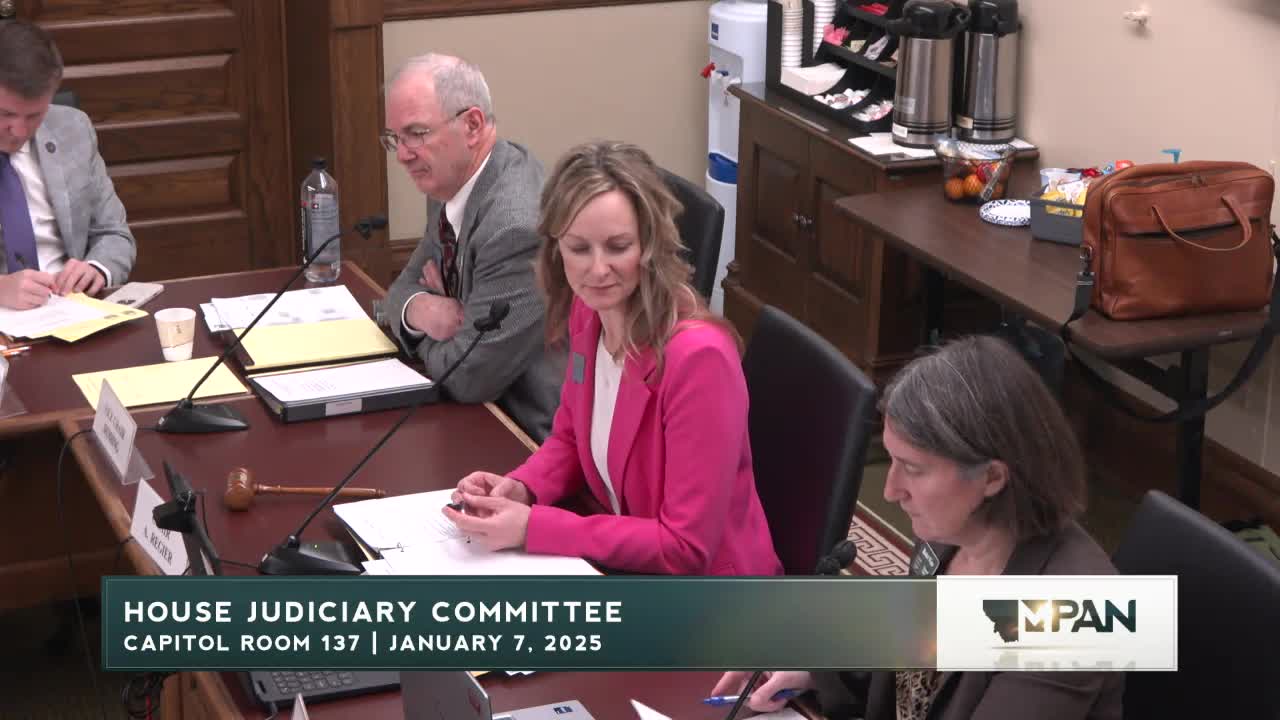
Chair Amy Regier and committee staff walked members through routine committee procedures at the first House Judiciary meeting, including how the committee will handle amendments, executive action and public testimony.
Research Director Rachel Weiss and committee attorney Joe Carroll reviewed amendment logistics. Weiss told members she and Carroll will draft and assist with amendments but asked that legislators provide at least 24 hours' notice for any requested amendment so staff and technical editors can prepare and review the language. Weiss said amendments generally receive quicker legal review than original bills and noted staff will try to accommodate last-minute requests but that 24 hours is a minimum for reliable drafting.
Chair Regier explained that executive action is the committee vote taken after a bill hearing; she said she will generally schedule executive action on Fridays but warned the schedule may change as the session progresses and the committee must forward bills to the floor. She asked members to expect occasional same-day executive action when bills require prompt movement to the floor. The committee also confirmed the traditional order for testimony: proponents first, opponents second, and informational witnesses identified only to answer questions rather than present competing testimony.
On decorum, Regier asked members to avoid personal attacks and to refrain from using proper names in testimony and debate; she said the committee room will designate a media/AV area to avoid distractions. The chair also reminded members that microphones must be used for the record and that members should check with staff about substantive legal questions outside hearings to allow staff time for research.
The committee discussed scheduling logistics, including that members should check email for details about a planned field trip to a state prison the following day. The chair also raised a snack-fund contribution for the session; members were asked to mark payment if contributing, and the chair said she would confirm an exact dollar amount later.
Why it matters: These procedural rules and scheduling practices determine how bills will be amended, debated and advanced through the committee during the legislative session and set expectations about fairness, notice and record-keeping.