Get Full Government Meeting Transcripts, Videos, & Alerts Forever!
Get email alerts on the Television City Redevelopment topic
No spam. Unsubscribe anytime.
Council hears hours of debate on Television City project as supporters tout jobs and opponents cite rushed filings
Summary
The City Council heard extensive public comment and council debate on a proposed Television City redevelopment (items 7–9), with labor and business groups urging approval for jobs and training, and opponents saying late changes limited public review and raised technical errors.
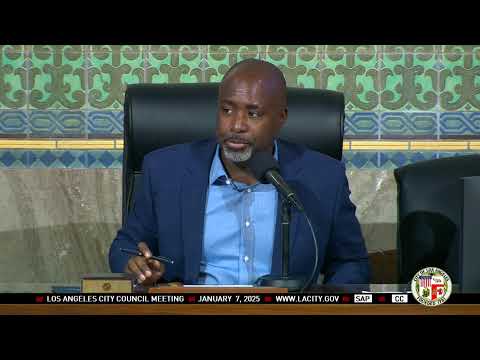
Councilmember Giorollaski introduced modifications to the Television City items on the agenda on Tuesday, and the Los Angeles City Council heard more than an hour of public comment on agenda items 7, 8 and 9 — the Television City redevelopment proposal — before moving to open the vote.
The project drew sharply divided testimony. Supporters, including union representatives and the project sponsor, said the redevelopment would create construction and long-term entertainment-industry jobs and preserve Television City as a production campus. Opponents and several community groups urged the council to delay action, saying hundreds of pages of changes were circulated late and that the public and reviewers had insufficient time to evaluate the revisions.
Why it matters: Council debate and votes on the Television City plan would affect planning rules for a major Hollywood-area production campus and are tied to community benefits, job commitments and land-use approvals that shape neighborhood development and local employment.
Supporters’ case
Michael Hackman, identified in the record as director of Capital Partners and Television City, told the council the project had involved “hundreds of hours of meetings” with the community and stakeholders and said the development would “create jobs, the businesses local will benefit, and we will create something truly special” for the area. Mario Bergen, speaking for IBEW Local 11, said the project would create “career pathways” and apprenticeships that keep middle‑class jobs in Los Angeles. Other labor and business speakers, including Joe Sullivan and several trade‑union representatives, urged approval on the grounds that the project would provide paid, trained work that benefits residents across districts.
Critics’ case
Speakers who opposed immediate action — including residents and representatives of neighborhood organizations — said the public record contained substantial changes released too late for meaningful review. One commenter said the council staff made “one hundred fifty pages of changes” available that morning and urged the council to refer the package back to the planning department for fuller review. Other opponents flagged specific technical corrections that were read into the record during the meeting: for example, corrections reducing a total development floor‑area figure from 1,724,000 square feet to 1,686,000 square feet and a corrected total floor area of 1,459,623 to 1,421,623 (as announced in the planning‑department text), and a reduction of an office uses total cited in the draft from five million square feet to 500,000 square feet.
Process and council remarks
Councilmember Giorollaski reviewed a series of technical revisions the planning department recommended for agenda items 8 and 9, including updates to maps and corrections to zoning references. He said the team had pared back office uses and reduced building heights in multiple places to mitigate impacts and added transport‑management and community‑benefit conditions, including $6.4 million in community investments and other targeted funds.
Several public speakers urged the council to uphold the right of robust review. One commenter said the volume and timing of filing changes made it impossible for the public and experts to assess environmental and neighborhood effects before a council vote.
Votes and next steps
The council proceeded to open the roll for the Television City items and for related agenda items. The transcript provided with this report records that the council opened voting after debate, but the final roll call tallies for the Television City motions and the amendment introduced from the dais were not specified in the provided transcript excerpt.
Ending
The Television City package remained the central focus of public comment during the meeting, with supporters pressing for the job and training commitments the developer and unions described and opponents pressing for more time to review late changes and technical corrections. The council’s formal record and the minutes will contain the final votes and any adopted amendments.