
Floodplain and drainage questions prompt staff briefing; county to contract drainage design manual
Get AI-powered insights, summaries, and transcripts
Subscribe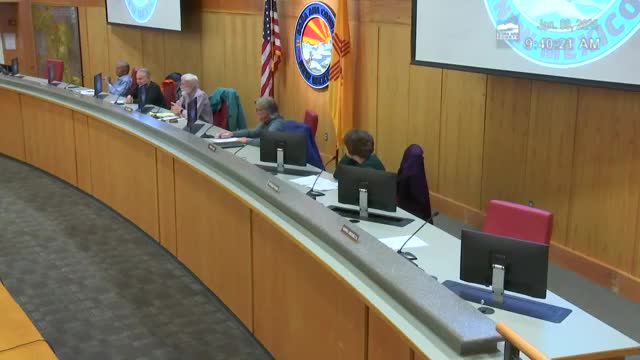
Summary
Floodplain administrator Michael Garza briefed commissioners on existing flood map data, required elevation certificates, subdivision requirements for base flood elevations and the county's plan to commission a drainage design manual (WSP) to clarify technical standards.
Commissioners received a technical briefing on floodplain mapping, elevation requirements and drainage standards from Michael Garza, the county’s engineer supervisor and floodplain administrator, and discussed how those rules affect permitting and subdivisions.
"We do have base flood elevations for the county," Michael Garza told the commission, walking through the National Flood Insurance Program mapping levels and the county’s treatment of unnumbered A zones. Garza described how shallow and depth-based zones (AH) and modeled channel zones (AE) produce different requirements for required elevations. "When a homeowner applies for a building permit in a flood zone, it's a requirement for them to have an elevation certificate... we require three throughout the process," Garza said, describing existing-conditions, pre-foundation and final elevation certificates tied to building permits and certificates of occupancy.
Garza and staff told commissioners the county can provide a flood-zone determination on request and said that if a subdivision contains a flood zone and exceeds the thresholds for major developments (the transcript cites 50 lots or 5 acres), the subdivision developer must establish base flood elevations for every lot in the development. Staff also discussed grading and drainage requirements and explained that engineering consultants normally calculate flow rates, grading impacts and pond volumes; county technical staff perform QA/QC on those submittals.
Commissioners expressed concern about local elevation baselines and whether some mapped flood areas appeared to extend to hilltops. Garza described the county’s prior map updates (noting effective flood maps in 2016) and explained the formal process to correct FEMA maps through a Letter of Map Change, which Garza said historically requires a submittal fee (reported in the transcript as $10) and 6–9 months for FEMA review, exclusive of engineering costs.
Staff told the commission that the county has hired WSP to produce a drainage design manual intended to clarify technical standards for individual lots, small subdivisions and large-scale developments; staff expects the manual around June 2025 and plans to route the document through Planning and Zoning and the Board of County Commissioners.
Ending: Commissioners asked staff to return with improved guidance and suggested adding flood-zone checks to a proposed applicant checklist so property owners see flood requirements early in the permitting process.