Get Full Government Meeting Transcripts, Videos, & Alerts Forever!
Get email alerts on the Ad Hoc Committees Dissolution topic
No spam. Unsubscribe anytime.
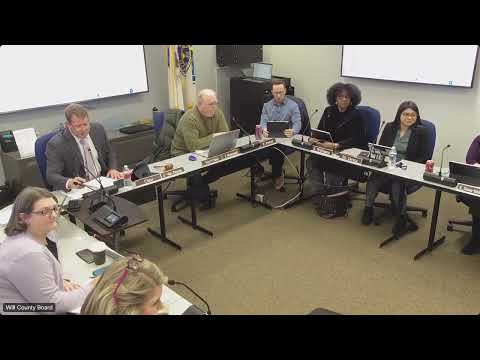
Will County executive committee rejects immediate dissolution of two ad hoc committees after members press for full-board review
Summary
The Will County Board Executive Committee declined to dissolve an ad hoc committee on the old courthouse and an ad hoc Access Will County committee after members urged that committee recommendations be presented to the full board before dissolution; separate motions to split the two dissolutions also failed.
The Will County Board Executive Committee debated and rejected a motion to dissolve two ad hoc committees — the ad hoc Old Courthouse Committee and the ad hoc Access Will County Committee — after several members said the committees’ recommendations should be presented to the full county board before the committees are dissolved.
The committee considered a motion to dissolve both ad hoc committees. Multiple members argued the ad hoc committees were formed for a single purpose: to craft a recommendation for the County Board. "The sole purpose of creating an ad hoc committee is to come up with a recommendation for the County Board and that's its sole purpose," said Dan Butler, a board member and past chair of the ad hoc committee on transportation and access. Butler and other members asked that the committee’s recommendations be presented to the full board before dissolution.
Why it matters: ad hoc committees are intended to concentrate staff and member time on a narrow task and then deliver a recommendation. Several members said dissolving these committees before their recommendations are heard would waste the volunteer and staff time invested over months.
During discussion, members raised different views about where unfinished work should land: some suggested moving the old courthouse work to the Capital Improvements Committee and the Access Will County work to Transportation, while Butler and others stressed that ad hoc committees should present directly to the full board before ending. Mary Tatro of the state's attorney's office explained the board’s adopted rules override a strict Robert’s Rules automatic dissolution: "It's entirely up to the public body to dissolve an, ad hoc committee or not," she said, noting ad hoc committees dissolve automatically only when their assigned subject has been fully addressed under standard parliamentary practice but the county’s rules permit Executive Committee action.
The Executive Committee voted on a motion to split the two dissolutions into separate votes; that motion failed in a roll call (the motion to separate did not pass). The final motion to approve dissolution of both ad hoc committees failed in a roll call vote 7–3 in the negative, and the committees remain active.
What’s next: Members who opposed immediate dissolution urged that the ad hoc committees’ recommendations be presented to the full County Board; some said the most practical next step is to have the past ad hoc chair or the Capital Improvements and Transportation committees move the recommendations forward to the full board for consideration.
Ending: The Executive Committee left the committees in place; members asked staff and leadership to arrange presentation paths so the work done by the ad hoc panels is considered by the full board rather than vanish by administrative dissolution.