Get Full Government Meeting Transcripts, Videos, & Alerts Forever!
Get email alerts on the Bellemeade Highlands Design Mobility Study topic
No spam. Unsubscribe anytime.
Planning commission adopts Bellemeade Highlands design and mobility study, urges NDOT review of Highway 100 access and prioritizes shared access
Summary
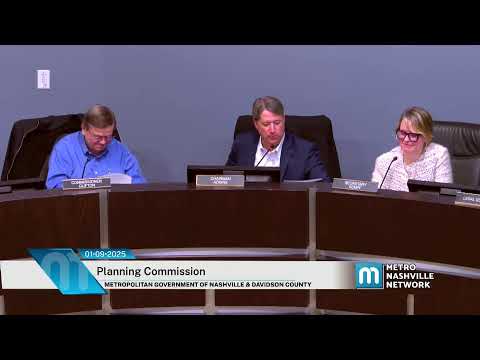
The Metropolitan Planning Commission on Jan. 9 adopted the Bellemeade Highlands Design and Mobility Study and directed multi‑agency follow‑up to reduce neighborhood traffic and move Cheekwood parking off Percy Warner Park, while asking NDOT to study potential State Route 100 access.
The Metropolitan Planning Commission on Jan. 9 adopted the Bellemeade Highlands Design and Mobility Study implementation plan and directed staff to coordinate with Metro Parks, Cheekwood, the city of Belle Meade and the Tennessee Department of Transportation on steps to reduce neighborhood traffic and move Cheekwood parking off Percy Warner Park.
Staff findings: Planning staff and consultant Kimley‑Horn presented a multi‑part analysis that identified three interlocking problems: (1) Cheekwood parking on parkland and overflow lots that is unsustainable, (2) the lack of arterial access for Cheekwood and some Percy Warner Park uses that routes guests through narrow neighborhood streets, and (3) transportation‑demand strategies that could reduce peak traffic. Staff recommended an implementation plan that includes: immediate transportation demand management measures by Cheekwood, a one‑year performance and reporting framework tied to any future Memorandum of Understanding (MOU) for overflow parking on parkland, and a direction for NDOT to undertake a technical study of potential access from State Route 100.
Why it matters: Cheekwood and Percy Warner Park are high‑use cultural and natural assets; the study found certain neighborhood streets see weekend volumes far above the consultant’s 1,000‑trips‑per‑day guideline, and staff concluded that arterial access from State Route 100 would materially reduce neighborhood traffic if feasible. The study balances heritage preservation, park protection, traffic engineering and parking policy.
Public comment and stakeholders: Hundreds attended multiple meetings during the study process. Cheekwood’s board chair, Ronald Roberts, said Cheekwood supports the plan and “we are fully committed to developing and implementing parking solutions on our property.” Cheekwood leaders, Friends of Warner Parks, neighborhood groups, mountain‑biking advocates, the Nashville Convention & Visitors Corp. and several corporate and civic donors provided testimony. Speakers supported moving parking off parkland and testing a Highway 100 access, while some mountain‑bike and park users urged careful study to avoid destruction of trails and impacts to protected parkland.
Key recommendations adopted by the commission: - Adopt the implementation plan and the performance benchmarks that would be attached to any new parking agreement between Cheekwood and Metro Parks; year‑one benchmarks must be met before extending any long‑term MOU. - Direct Metro Planning staff to coordinate with Metro Parks, NDOT, Cheekwood and other stakeholders to execute the plan and monitor benchmarks. - Find public interest in studying establishment of a new State Route 100 access near the park’s northern boundary and ask NDOT to evaluate access alternatives and feasibility. - The commission also approved a friendly amendment prioritizing investigation of shared arterial access solutions where feasible, and asked NDOT and Metro Parks to consider natural‑resource and trail impacts in their technical analysis.
Outcome and next steps: The commission adopted the plan and its recommendations by voice vote with the amendment to emphasize shared access as a priority. Staff will provide technical coordination, NDOT will be asked to produce a formal analysis of Highway 100 access alignments and feasibility, and Metro Parks will manage MOU negotiations and monitoring tied to the performance benchmarks.
Ending: The study starts a multi‑year, multi‑agency process. Any construction of new access or permanent parking on parkland will require further environmental review, NDOT concurrence, Metro Parks approvals and, where appropriate, Council and state permits.