Get Full Government Meeting Transcripts, Videos, & Alerts Forever!
Get email alerts on the Education Literacy topic
No spam. Unsubscribe anytime.
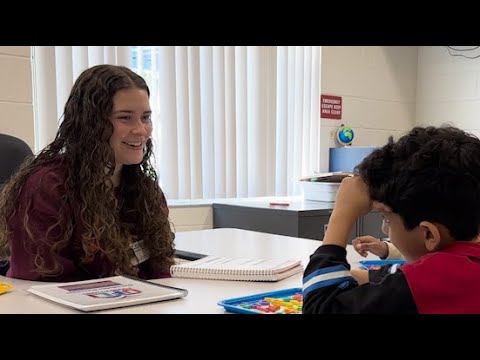
12th‑grader describes 30‑minute UFLI tutoring sessions for younger students
Summary
Emma Schroeder, a 12th‑grade student, described a volunteer literacy program that pulls younger students from class for 30‑minute UFLI sessions focused on phonics, spelling and sentence reading; she said the program benefits both the younger students and the high school volunteers.
Emma Schroeder, a 12th‑grade student, described a volunteer literacy program that pulls younger students from class for 30‑minute UFLI sessions to practice phonics, spelling and reading.
Schroeder said the sessions begin with phonics instruction: “We do the sounds or breaking up words,” then students use letter blocks to build words, spell on a dry‑erase board, make sentences and read those sentences aloud. “So it's all all combined into the 30 minutes,” she said.
The program is designed to give younger students concentrated, one‑on‑one or small‑group time outside the regular classroom. “They love getting pulled out of class and coming to a different room and being with a different person for just the 30 minutes,” Schroeder said, adding that the change of environment helps motivate the children.
Schroeder also described benefits for the high school volunteers: she said volunteers learn how to help younger students and gain mentoring experience. “For the high school kids, I think it's important because you get to learn skills on how to help people who are younger than you,” she said, adding that initial nervousness fades as volunteers and students get to know one another.
Details about the program organizer, how often sessions run beyond the 30‑minute blocks, the number of participating students, and funding sources were not specified in the remarks.