Get Full Government Meeting Transcripts, Videos, & Alerts Forever!
Get email alerts on the Student Support Services topic
No spam. Unsubscribe anytime.
Ogden School District details community partnerships supporting PBSS, mental health and attendance
Summary
The district highlighted partnerships with Weber Morgan Health Department, Weber Human Services, Seager Clinic, United Way and others to support Positive Behavior Support Systems (PBSS), youth court, school-based mental health, attendance mediation and wraparound services.
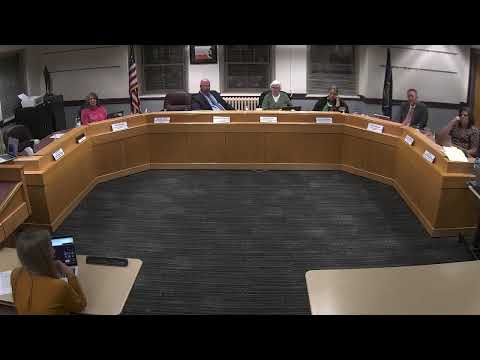
Nicole Lovell, director of student advocacy for Ogden City School District, briefed the board on the district's community partnerships that support Positive Behavior Support Systems (PBSS), early intervention and student wraparound needs.
Lovell summarized partnerships and programs the district uses to address behavior referrals, emotional regulation and attendance. She identified Weber Morgan Health Department as a partner for youth court, a grant supporting junior-high students (the E-SIG grant), and a terrorism and violence prevention grant that enabled Hope Squad programming in elementary schools and aligned after-school curricula. She said the health department also funded two community health worker positions (COVID-era remaining funds) to provide family-center support and to assist with post-high-school transitions.
Lovell described Weber Human Services' role in providing clinicians and funding for a day-treatment option in the district's alternative-placement setting, assigning a clinician at Odysee who can provide services in students' home languages, and supplying interns to the family center to expand capacity. She said Weber Human Services participates in weekly collaborative team meetings and supports screening, referrals and case transitions from school-based short-term services to more intensive community services.
Other partners Lovell listed included Seager Clinic (funding to serve uninsured students, with 25 slots funded through a church-affiliated allocation), United Way (resource mapping and targeted grant searches to support attendance work) and Youth Impact and Boys & Girls Club (after-school programming and referral coordination). Lovell said Seager Clinic has placed 17 students in at least one session and 13 in ongoing support under the current allocation.
Board members asked about the scope of school-based mental-health services and metrics. Lovell said school-based social-work and counseling support is short-term and problem-focused (typically 8'16 weekly 30-minute sessions) with parent involvement; students requiring more intensive services are referred to Weber Human Services or other community providers. For attendance, Lovell said the district uses Panorama's early-warning system and compares quarter-to-quarter trends, tracks average daily attendance and counts of regular vs. chronic attenders, and is piloting attendance mediation nights in collaboration with partners.
Board members praised the partnerships and asked staff to keep tracking outcomes. Lovell said the district coordinates practicums and internships through a social-work specialist (identified as the district's pipeline lead for university practicum fairs) and confirmed that Ally Johnson coordinates after-school-program contacts.