Get Full Government Meeting Transcripts, Videos, & Alerts Forever!
Get email alerts on the Levee Maintenance topic
No spam. Unsubscribe anytime.
Commission discusses cutting trees on West End Levee to meet levee maintenance; no formal action taken
Summary
Commissioners discussed removing and processing trees from the West End Levee to comply with levee maintenance and potentially recover lumber value, but deferred decisions pending valuations and a bat-season restriction.
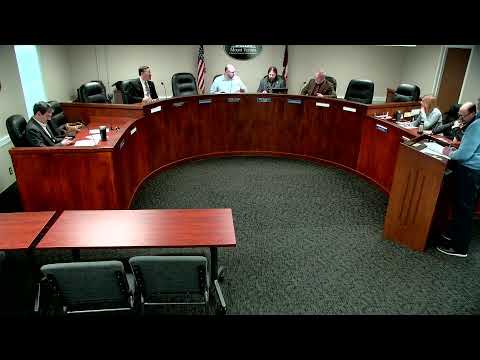
Mount Vernon Utilities Commission members discussed a proposal on Jan. 9 to remove, process and store trees from the West End Levee as part of deferred levee maintenance and potential future city projects, but took no formal action.
Staff described estimated costs for tree removal ($20,000), drying ($29,000) and processing (about $23,000), and noted an option to reduce costs by allowing a processor to take some timber in exchange for services. The proposal would cover the riverside slope of the levee from High Street to the bridge south to the railroad tracks, an area staff described as heavily forested.
Staff emphasized that federal regulations require levees to be free of trees within 15 feet of each toe, and that American Electric Power is removing trees on the inside slope under its transmission project. Commissioners and staff discussed whether to inventory and grade the logs to estimate market value, whether to sell finished lumber or give logs to a contractor, and the logistics and costs of kiln drying and storage.
A key constraint raised: cutting is limited by wildlife protections. Staff said an April 30 cut-off applies and that cutting between May and October would likely require a formal bat study because of two endangered bat species using the trees; that requirement would add significant cost and change the project timeline.
Commissioners asked staff to return with more detailed cost-benefit analysis, including a timber appraisal, estimates for in-kind processor arrangements, storage costs, and an estimate of the work that could be completed this spring versus next winter. No motion or vote was taken; staff said further investigation would be reported back to the commission.