Get Full Government Meeting Transcripts, Videos, & Alerts Forever!
Get email alerts on the Land Use And Development topic
No spam. Unsubscribe anytime.
Bradenton CRA debates short-term uses, long-term plans for Village of the Arts property
Summary
Board members and the mayor discussed possible interim and long-term uses for a city-owned parcel in the Village of the Arts, including flexible event/parking designs, fencing, lighting and a consultant-led community vetting process. No formal action was taken.
Board members and city officials spent an extended portion of the Jan. 8 meeting discussing the future of a city-owned property in the Village of the Arts (sometimes described in the meeting as the “Green property”), debating short-term interim uses and a longer-term redevelopment strategy.
Board member Mark Wilman urged the CRA to develop a concrete proposal for the site rather than wait indefinitely for a community plan: "I would like to see the appropriate use of that site from everything I've seen… partially as a parking lot, partially as an event space, with the appropriate lighting, with the appropriate fencing… something that is functional yet aesthetically pleasing and fits into the village." He asked staff to return with a recommended concept at the next meeting.
Mayor Neil Brown, who spoke at length during the discussion, said the city has done work to reopen event activity after recent storms and encouraged the Village of the Arts community to organize and present a unified proposal to the CRA. "I challenge the Village of the Arts group to come together… The village is us, not just the CRA. It's the city. It's the village," Brown said, urging collaboration between the neighborhood and city staff.
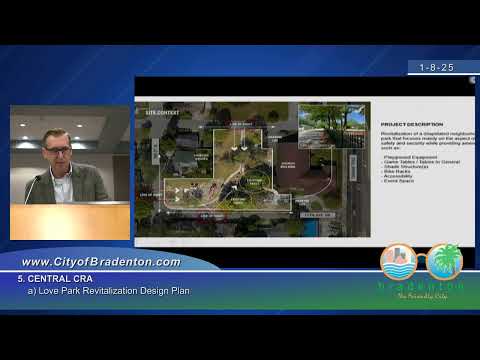
Other board members pressed for approaches that would be reversible if a higher-priority redevelopment project later emerged. One member suggested flexible, removable treatments—examples included food trucks, artistic fencing, temporary lighting and hedges rather than a permanent asphalt lot—so the area could be used for events and activated in the short term without precluding long-term projects. Staff confirmed they have a site plan for the property and noted that a larger, multi-CRA project addressing distributed parking, stormwater and streetscape improvements is planned as a long-term effort (presenter cited a 3–5 year timeline for that larger project).
Public-works staff were directed to assess traffic and access options for the site; staff said the primary entrance location (possibly not on 13th Street) and safety, lighting and fencing options should be analyzed as part of that review. No vote was taken. Speakers emphasized balancing near-term activation and safety against the risk of turning the parcel into a permanent, low-quality parking lot.