Get Full Government Meeting Transcripts, Videos, & Alerts Forever!
Get email alerts on the Municipal Finance topic
No spam. Unsubscribe anytime.
Cheyenne audit: auditors issue clean opinions; no material weaknesses or compliance findings
Summary
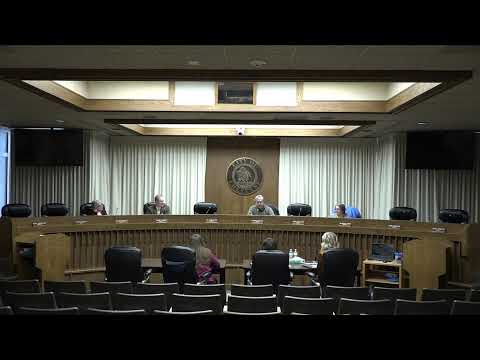
Auditors presenting the City of Cheyenne’s fiscal year ended June 30, 2024, financial and compliance report told the City Council that they issued unmodified (clean) opinions on the city’s financial statements, on compliance under government auditing standards, and on federal-award compliance as part of the single audit.
Auditors presenting the City of Cheyenne’s fiscal year ended June 30, 2024, financial and compliance report told the City Council that they issued unmodified (clean) opinions on the city’s financial statements, on compliance under government auditing standards, and on federal-award compliance as part of the single audit.
The audit partner, Miss McGreen, told the council the accompanying financial statements “present fairly in all material respects” and that the audit did not identify any material weaknesses or significant deficiencies in internal control. McGreen also said auditors found no instances of noncompliance with laws, regulations, or state statute that required reporting.
Those findings matter because they affect public confidence in the city’s financial reporting and its stewardship of federal and state funds. The auditors flagged two disclosure notes as likely to be of interest to council members: note 8 (the city’s net pension liability through Wyoming Retirement Systems) and note 14 (other post‑employment health care, or OPEB). Both carry actuarial assumptions that can produce year‑to‑year volatility in the city’s long‑term liabilities.
Auditors said there were no new accounting pronouncements the city was required to adopt for the year, and no changes in previously adopted accounting policies. McGreen said the audit identified journal entries that the treasurer’s office provided after the audit began but that “no audit adjustments were identified by us during the course of the audit.” The auditors also reviewed significant accounting estimates — the pension liability, the OPEB liability, and the incurred‑but‑not‑reported (IBNR) claims estimate in the city’s self‑insurance fund — and found the estimation processes to be reasonable.
The report lists the city’s federal expenditures for the year at $10,200,000 (including amounts expended by BOPU). The auditors said they audited two federal programs: the Coronavirus State and Local Fiscal Recovery Fund (CSLFRF) and the Staffing for Adequate Fire and Emergency Response (SAFER) program. McGreen reported roughly $4.42 million of federal expenditures were subjected to audit procedures this year, an amount the auditors said is “in excess of 40%” of total federal spending for the city.
On auditor independence, McGreen said the audit firm and the city maintain ongoing communication to identify and address any independence concerns; she noted the treasurer’s office informed auditors promptly about changes in the city attorney position even though those changes did not affect the 2024 audit.
Council members asked about the Downtown Development Authority (DDA) audits. McGreen said the DDA’s financial statements are audited separately by another firm; council staff confirmed the June 2024 DDA audit was provided to council. The 2023 DDA audit, she said, had a qualified opinion due to documentation shortages from the prior fiscal control agent.
There were no formal council actions or votes on the audit at the meeting. Several council members expressed appreciation for the treasurer’s office and the audit results during the discussion. The auditors said their work begins with planning in July, includes summer fieldwork on federal programs, and continues through December.
The presentation concluded with McGreen inviting questions; no follow‑up formal actions were taken by the council during the session.