Get Full Government Meeting Transcripts, Videos, & Alerts Forever!
Get email alerts on the Jail Population topic
No spam. Unsubscribe anytime.
Sawyer County jail population below 60 as pretrial, probation cases remain sizable
Summary
County staff presented an end-of-year jail report showing an average daily population decline to 57 and described the current mix of pretrial, probation and sentenced inmates and related pretrial program caseloads.
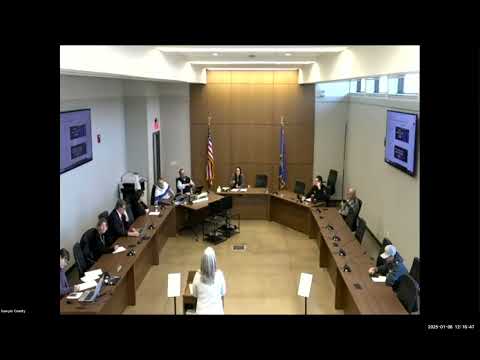
Sawyer County staff presented an end-of-year jail report to the Criminal Justice Coordinating Council showing the county’s average daily jail population has fallen in the last three years and was 57 on the day of the report.
The report detailed the composition of the jail population: roughly half of inmates were pretrial detainees, about 30% were on probation-related holds, and about 17% were serving sentences. Two people were reported as being monitored by electronic bracelet. County staff also said they are reinstating race data in the report under terms of a memorandum of understanding with the tribal government.
Council members and the sheriff discussed getting the district’s annual case-flow report so the council can benchmark pretrial-to-trial metrics. The sheriff agreed to share the jail report with council members on request. The county’s criminal justice coordinator said the Council will try to obtain additional court-produced measures to track cases coming in and going out of the system.
The coordinator also reviewed partner program caseloads reported to the CJCC: Justice Point’s pretrial work was reported as having 102 active pretrial cases; 17 wait-list letters had been sent and one person was listed as awaiting placement. Diversion and treatment programs were described as operating but with pending referrals; the exact pending-referral counts were discussed in the meeting record and were not fully consistent in the verbal report.
Council members pressed staff for better, regular reporting so commissioners can track where inmates are coming from, how pretrial caseloads change, and how jail capacity is affected by programmatic interventions. Staff said they will try to provide court benchmarking and a single-page summary of the CJCC’s stacked grants and programs for future meetings.