Get Full Government Meeting Transcripts, Videos, & Alerts Forever!
Get email alerts on the College Financial Aid topic
No spam. Unsubscribe anytime.
Round Lake staff demos 2025–26 FAFSA walkthrough for students and parents
Summary
A staff member at Round Lake CUSD 116’s College and Career Center demonstrated how to complete the 2025–26 FAFSA, highlighting FSA ID login, IRS data transfer, parent contributor invites and verification steps for special circumstances.
A staff member from the Round Lake CUSD 116 College and Career Center demonstrated the 2025–26 Free Application for Federal Student Aid (FAFSA), guiding students and parents through login, data transfer from the IRS, dependency questions and the parent contributor process.
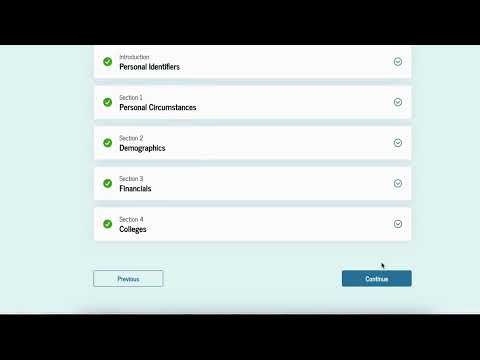
The demonstration showed the full online flow: logging in with an FSA ID, consenting to pull federal tax information from the IRS, answering dependency and homelessness questions, inviting parents or stepparents to contribute, and signing and submitting the form to generate a student aid index (SAI) for colleges.
The presenter explained that students must sign in with an FSA ID and that the portal will prompt a two-factor code by phone or email. “I will be walking through the FAFSA by using this prototype,” the staff member said, then proceeded to create a student form and show the four introductory FAFSA videos available on the site.
The staff member walked through the IRS data-transfer consent, noting that the FAFSA can pull tax data from the IRS using a Social Security number or an individual taxpayer identification number (ITIN) if a parent is undocumented. They emphasized that pulling IRS data is the easiest way to populate tax fields automatically.
The demonstration covered the dependency questionnaire that determines whether a student must provide parent information. The presenter said that answers about homelessness or being self-supporting after July 1, 2024, can make a student independent, but a district homeless liaison must provide a verification letter for colleges if a student claims that status.
On the parent side, the presenter showed how the student sends an invitation to a parent contributor and said it is important that the parent already has an FSA ID and that the parent’s identifying information match their FSA ID exactly; otherwise the system will not link the accounts. “It is very important that when you get to this step, both parents, if you have to put both in, already have an FSA ID,” the staff member said.
The presenter demonstrated entering parental financial information (imported from the IRS when consented) and explained household-size and family-in-college questions that affect aid calculations. The demonstration showed how applicants can add up to 20 schools to receive FAFSA information and used Barnard College as an example school the student added.
The staff member noted program differences for Illinois residents: an eligible in-state student must attend an eligible Illinois college to receive the Monetary Award Program (MAP) grant; students who attend out-of-state schools may still be eligible for federal Pell grants. In the prototype the presenter said Pell grants are “just under $8,000” for the year and used a sample SAI of 5,000 to illustrate how aid eligibility is calculated. The presenter also said that colleges typically send financial aid award letters in February or March.
The staff member concluded the demonstration by signing and submitting the prototype FAFSA and reiterated help resources: “If you have any questions, please feel free to stop into my office in the College and Career Center, 8307 A, and I look forward to helping you complete your FAFSA.”
Less substantive items in the demonstration included demographic fields (gender, race/ethnicity, citizenship and high school completion status) and explanations of which parental assets or benefits to report. The presenter repeatedly cautioned that some special circumstances—such as refusing to provide parent information—can make a student ineligible for certain grants and may limit a student to unsubsidized loans.
Where the demonstration involved policy or verification, the presenter specified the source of proof when required (for example, a district homeless liaison letter for homelessness-based dependency). No formal decisions or votes were taken during the demonstration; it was an instructional presentation for students and parents.