Get Full Government Meeting Transcripts, Videos, & Alerts Forever!
Get email alerts on the Digital Inclusion topic
No spam. Unsubscribe anytime.
DigitalC reports 2,802 installs, 7,617 people trained and coverage of ~82,000 homes in first year of ARPA‑funded Cleveland program
Summary
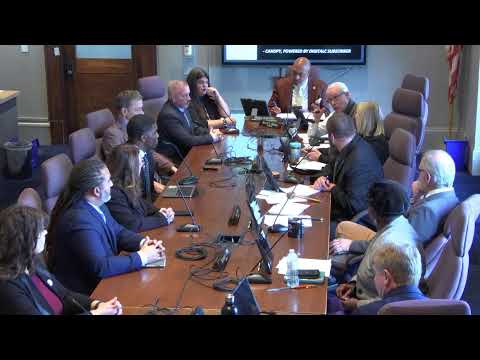
DigitalC told Cleveland’s Utilities Committee on Jan. 9 that in the first year of the city’s performance‑based, ARPA‑supported program it connected 2,802 households, trained 7,617 residents and mapped roughly 82,000 homes for potential service.
DigitalC presented a year‑one performance update to the Cleveland Utilities Committee on Jan. 9 under the city’s performance‑based contract funded in part by $20 million in ARPA funds.
Josh Edmonds, DigitalC’s lead presenter, told the committee that in calendar 2024 the nonprofit connected about 2,802 households, trained 7,617 residents in digital‑literacy programs, and currently maps coverage for roughly 82,000 homes across Cleveland. Edmonds said the organization recorded a 1% churn rate (38 subscribers) and described last year’s subscriber growth as an "818% increase" from the early‑year baseline; DigitalC characterized the performance as exceeding several contract goals for the first year. Edmonds and his team asked the committee to approve the next legislative step to draw down contract funds; city staff said no ARPA funds had been drawn down before the committee hearing.
What council members asked for and why it matters
Council members used the presentation to press for operational details the city needs to exercise oversight of a large, public‑funded program. Committee members repeatedly requested an address‑level and ward‑level breakdown of current subscribers and asked DigitalC to provide a clear, shareable “newsletter” or boilerplate language council members can use with constituents. Council members also raised these points:
- Coverage versus availability: Council members and DigitalC staff explained the difference between a mapped coverage area and whether a particular address is currently being sold and scheduled for install. DigitalC’s staff described an internal validation and optimization process: a site or tower may be active technically, but staff will not push an address to the sales queue until engineering and the call center confirm the signal meets the contract’s quality standards. DigitalC said it aims to have full city coverage by June 2025 but that the timeline depends on site commissioning, permitting and engineering optimization.
- Contract metrics and next step for funding: City staff confirmed the contract is performance‑based and that the city had not yet released ARPA funds; committee members were told DigitalC would request a drawdown at a subsequent legislative hearing. A city staffer said the year‑one install target in the contract (as reported during the hearing) was 35,100 installs; DigitalC reported 2,802 installs for the same period and that it will continue to scale operations.
- Customer mix and subsidy questions: DigitalC reported multiple funding streams for the initiative as stated at the hearing — city ARPA $20 million (allocated, not yet drawn down), $10 million from the State of Ohio, and philanthropic support (identified in the hearing as Mandel Myers Foundation and the Jewish Federation). City staff and DigitalC said Cleveland Public Schools is subsidizing service to about 900 CMSD households under a separate agreement; DigitalC said that roughly 45% of customers are self‑pay and that the remainder are subsidized through program partners or benefit programs.
- Outreach, door‑to‑door sales and installers: DigitalC described door‑to‑door sales and community partnerships (CMSD, CMHA, nonprofits and local influencers) as a key growth driver. Committee members asked for a list of installers and whether out‑of‑town contractors were being used to accelerate deployment; DigitalC said it had three contracting partners and six in‑house installation teams and that some contractors were brought in to transfer technical knowledge to local hires.
Selected performance figures and program details (as presented)
- Installs completed (calendar 2024): 2,802 households (DigitalC report to committee).
- Digital‑literacy training: 7,617 residents trained (exceeds 7,500 year‑one target cited by committee staff).
- Homes covered (mapped coverage): ~82,000 homes (DigitalC said map coverage includes wireless coverage plus some multi‑dwelling buildings where the service is wired).
- Churn: 38 subscribers (about 1% as stated by DigitalC).
- AMI/AMR and system notes: Council members and staff discussed technical validation, signal propagation and optimization; staff asked DigitalC to provide ward‑by‑ward and street‑level lists of customers so council members can check constituent reports.
Council requests and follow‑up commitments
DigitalC and city staff committed to provide the committee documentation early next week, including: an install and subscriber breakdown by ward and street, a list of addresses that the department considers ready for commercial sales, the number of installs tied to specific subsidy programs (CMSD, CMHA and other partners), and a short, shareable newsletter text and graphics council members can use to inform residents. City staff told the committee DigitalC will return the following week for the legislative action to authorize drawdown of the ARPA funds.
Ending: Committee members thanked DigitalC staff for the presentation and emphasized the need for clearer, address‑level information before the council authorizes the ARPA drawdown.