Get Full Government Meeting Transcripts, Videos, & Alerts Forever!
Get email alerts on the Public Hearing Procedure topic
No spam. Unsubscribe anytime.
Committee recommends shorter applicant presentations, adds guaranteed Q&A window
Summary
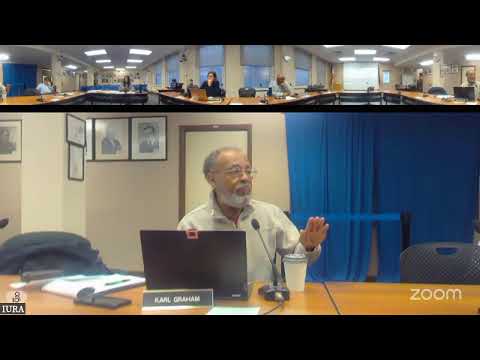
The Ithaca Redevelopment Agency Grants Committee discussed changing public-hearing rules to reserve time for questions from committee members by shortening applicant presentation time and providing committee-generated questions in advance.
The Ithaca Redevelopment Agency Grants Committee discussed a proposal to shorten applicant presentation time during public hearings and to supply applicants with committee-generated questions in advance.
Committee members said applicants traditionally have 12 minutes for a presentation and often use the entire time, leaving little or no time for committee questions. Carl (committee chair) and staff proposed reducing presentation time to eight minutes and reserving at least four minutes for questions from committee members, with flexibility if applicants finish early.
The committee discussed operational details and alternatives. Several members favored giving applicants committee questions in advance so applicants can integrate answers into their presentations. Anissa (staff member) said staff plans to convey committee questions to applicants ahead of hearings and that additional follow-up questions will still be allowed at the end of a presentation. Mary Baker (committee member) said advance questions may lengthen presentations for some applicants and urged clarity on timing to ensure equity.
Speakers also discussed using a percentage rule instead of fixed minutes—two-thirds of the period for presentation and one-third for questions—to avoid having to revisit timing if the total hearing length changes. Cheyenne (committee member) and other members raised that a simple maximum/minimum (for example, maximum 8 minutes for presentation, minimum 4 minutes for questions) may be easier for applicants to follow.
Committee members noted scheduling constraints: the IRA now meets at 9 a.m. on some public hearing days and application counts vary (commonly 18–25 applications). Staff and members agreed that committees should generate questions as early as possible so staff can get them to applicants before the hearing; members suggested a two-week lead time when feasible, but staff cautioned the exact lead time may vary due to scheduling and review timelines.
No formal vote was taken at this meeting. The committee plans to take its recommendation to the full IRA board for adoption at a future meeting.