Get Full Government Meeting Transcripts, Videos, & Alerts Forever!
Get email alerts on the Ada Accessibility topic
No spam. Unsubscribe anytime.
Historic Preservation Commission approves ADA intersection upgrades in downtown
Summary
The Historic Preservation Commission voted to grant a Certificate of Appropriateness for Americans with Disabilities Act upgrades at three downtown intersections, approving work that will replace and preserve existing brick, mill and overlay asphalt, and allow conditional storm‑drain repairs. Commissioners voted 5-0 to approve the application.
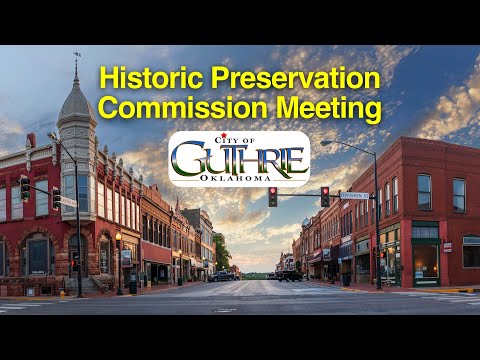
The Historic Preservation Commission voted 5-0 to approve a Certificate of Appropriateness for Americans with Disabilities Act improvements at three downtown intersections: Wentz Street at Oklahoma Avenue, Harrison Avenue at First Street, and Oklahoma Avenue at First Street.
The commission’s action clears a design that preserves existing brick paving where present, replaces brick one-for-one, and uses mill-and-overlay asphalt in the roadway centers. A staff member said the city will replace existing brick “back in the areas where there’s concrete,” and will not add new brick beyond what already exists. The staff member added, “We estimate that we can do 3 intersections with $876,000. We’ve got approximately a 1,000,000 and a half, dedicated to this project.”
The work is funded through the city’s Capital Improvement Program (CIP) number 2, approved in April 2024; staff said the project is ready for bidding once the commission’s approval was recorded. Officials described the paving approach as a mill-and-overlay for the intersection centers, with concrete approaches on the wings. Staff said storm‑drain structures will be evaluated during construction and only replaced if they are determined to be deficient.
Commissioners asked several implementation questions before the vote, including what areas would receive full‑depth asphalt and whether preserved brick would be reinstalled. A staff member said the plan is to remove damaged asphalt in the center, mill it, and replace it with new asphalt while reinstalling existing brick where present so the downtown streetscape remains consistent with earlier ODOT‑coordinated work on nearby blocks.
Project sequencing and funding were discussed: staff said the city expects to bid the work after plan approval and budget confirmation, and estimated roughly six months to reach a point where a clearer construction schedule would be known. The three intersections were selected in part on traffic counts and downtown activity, staff said. The city estimated the three intersections could be completed for about $876,000 and reported approximately $1.5 million available for the overall project from CIP 2 funding.
The motion to approve the Certificate of Appropriateness passed unanimously among commissioners present. Commissioners voting yes were Commissioner Nathan Turner, Commissioner Valerie Duncan, Commissioner Daryl Covington, Commissioner Phil Nichols and Commissioner Maneka Gibbs. Staff indicated that, after award of contracts, construction would be sequenced so intersections are not under construction simultaneously.
The commission also approved previous meeting minutes earlier in the session. No members of the public spoke on this agenda item. The commission did not propose adding new brick beyond existing areas; storm‑drain replacement will occur only if inspections during construction show it is necessary.