Get Full Government Meeting Transcripts, Videos, & Alerts Forever!
Get email alerts on the School Discrimination Training topic
No spam. Unsubscribe anytime.
Prosser School District trains staff on preventing student discrimination and eliminating bias
Summary
Deanna Flores, the district civil rights coordinator, led a staff training covering recognition and response to discrimination, required complaint procedures, and steps to remove bias from materials, counseling and discipline.
Deanna Flores, Prosser School District’s civil rights coordinator, led a staff training on recognizing and preventing discrimination, responding to incidents and eliminating bias in instructional materials, counseling and discipline.
Flores said the district’s work rests on state and federal protections and district policies, and described concrete steps staff must take “once on notice of potential discrimination or discriminatory harassment”: investigate, take prompt steps to stop the conduct, eliminate a hostile environment, prevent recurrence and remedy effects.
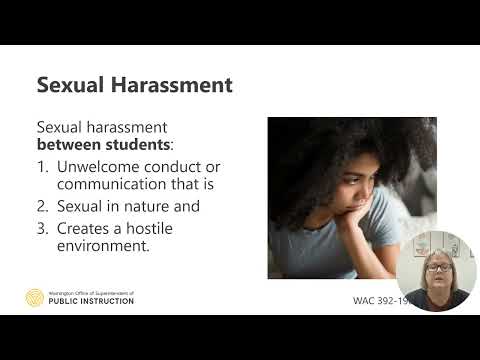
The training summarized Washington state’s 12 protected classes — including race, color, national origin, religion or creed, sexual orientation, gender identity and disability — and noted that schools must ensure equal access to programs such as advanced courses, dual credit, career and technical education, extracurricular activities and transportation. Flores described two common forms of unlawful treatment in schools: unequal access to programs and discriminatory harassment, which becomes unlawful when based on a protected class and when conduct is severe, persistent or pervasive enough to limit a student’s ability to participate in school.
Flores reviewed district procedures for handling complaints. Employment-related nondiscrimination policies and complaint procedures cited in the training include board policies 5010 and 5010P and 5011 and 5011P; student-focused policies include the HIB policy 3207 and 3207P and nondiscrimination/complaint procedures 3204, 3240P, 3210 and 3210P. For written discrimination complaints, Flores said the district (the Local Education Agency) must complete a neutral investigation or otherwise respond in writing within 30 days; complainants may appeal through the superintendent or the school board and then to the Office of the Superintendent of Public Instruction (OSPI).
Flores emphasized that staff do not need to wait for a formal written complaint to act. “If it’s seen, noticed by staff members, it has to be reported and we have to respond to it even if nobody filed a complaint,” she said. She instructed employees to notify the district Civil Rights Coordinator and to ensure immediate safety measures when students are at risk. Flores also explained that incidents that involve both HIB (harassment, intimidation and bullying) and discriminatory harassment should be addressed under both procedures in coordination with the HIB coordinator.
The training named Kim Casey as the district’s HIB coordinator and Nikki Swanson as special education director and noted Title IX and Section 504 as federal protections cited in the district guidance. Flores described OSPI resources, including a materials-screening rubric the district uses to identify biased instructional content and recommended annual review of enrollment and discipline data to detect “substantial disproportionality” in specialized programs or discipline rates.
Flores closed the session by pointing participants to OSPI’s Office of Equity and Civil Rights, the U.S. Department of Education Office for Civil Rights, the U.S. Equal Employment Opportunity Commission and the Washington State Human Rights Commission for additional guidance and complaint options.