Get Full Government Meeting Transcripts, Videos, & Alerts Forever!
Get email alerts on the Wetlands Conservation District topic
No spam. Unsubscribe anytime.
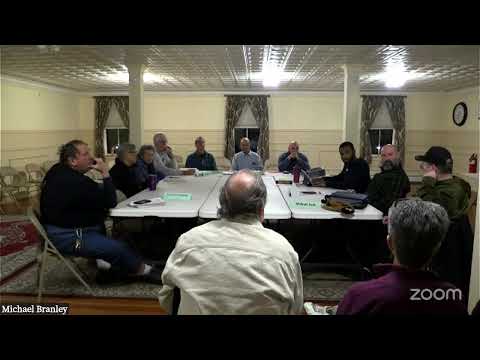
Planning board hears extensive public comment on wetlands amendments; backs tighter definitions and exemptions but stops short on full 75‑foot opposition
Summary
The Swansea Planning Board on Jan. 9 heard a multi‑hour public hearing on proposed wetlands conservation amendments (articles 8–12) that would add a 75‑foot naturally vegetated upland buffer and change allowed uses in wetland areas.
The Swansea Planning Board on Jan. 9 held a public hearing on proposed zoning amendments (articles 8–12) to create a Wetlands Conservation District that would, among other changes, add a naturally vegetated upland buffer of 75 feet and revise permitted and prohibited uses within wetland areas.
The Conservation Commission presented the technical basis for the package, saying a 2023 townwide wetlands evaluation by Lizwood Ecological identified 374 wetlands in town totaling about 2,824 acres and found many wetlands lacked naturally vegetated buffers. The presenter said the amendments are intended to protect water quality, flood storage and wildlife habitat and to allow limited low‑impact uses while restricting new development within the buffer.
The proposal would: apply a 75‑foot naturally vegetated upland buffer for marshes, swamps, bogs, vernal pools and forested bottomlands; reduce the town's 125‑foot septic setback to the state standard of 75 feet in most cases; exempt some manmade features (stormwater swales, farm ponds, fire ponds) from the district; and narrow allowed uses to items such as footpaths, boardwalks, certain forest management and agriculture using best practices, and maintenance of existing structures. The draft also spells out prohibited activities including parking lots, underground fuel storage, large new structures and changing natural drainage within the district.
Why it matters: presenters told the board the town’s wetlands provide flood protection, groundwater recharge and wildlife habitat, but that the existing overlay “is not fulfilling its stated purpose” because buffers have been lost. The conservation materials and maps are intended to feed a new open‑space plan that the commission said will be completed in the coming year.
Public comments and concerns were wide ranging. Consultants representing commercial property owners and developers said a 75‑foot buffer as written would make many current and approved commercial and industrial parcels effectively unbuildable, particularly in the Safford Drive TIF/industrial area where investment in roads, water and sewer was made to encourage development. One consultant said roughly 60% of the TIF district land could be affected. Several residents and public correspondents urged stronger protections for wetlands to guard against flooding and to protect wells and water quality; others, including the Board of Selectmen in a formal letter, asked the board not to place the amendments on the 2025 warrant without more study and without a relief path for property owners.
Several speakers recommended the town adopt a conditional‑use or special‑exception process so the planning board and conservation commission could review site‑specific proposals and work through tradeoffs rather than leave relief to the zoning board’s variance standard. Planning professionals in the room described conditional‑use permit processes they have used in neighboring towns to allow engineered crossings or site designs that protect high‑value wetland functions while permitting reasonable access or development where appropriate.
Board actions and next steps: the Planning Board took recorded motions on individual amendments during the hearing. The board voted to recommend (support) the amended definition language in amendment 9 and voted to recommend amendment 12 (exemptions for manmade stormwater features and certain ponds). The board voted not to recommend amendments 10 and 11 as drafted (those items contain the detailed lists of permitted uses, setbacks and the 75‑foot undisturbed buffer requirement). On amendment 8—the single article that would formally add the 75‑foot upland buffer—board members voted on a motion to register opposition but that motion did not carry; the transcript records that the board “did not adopt” the motion to oppose amendment 8. (All of the warrant articles will proceed to the ballot where required, either by board action or by citizen petition.)
Quotes: “A healthy, intact wetland requires some protection around it,” the Conservation Commission presenter said while explaining the study results and the recommendation for vegetated upland buffers. Sarah Cargineau, a Winchester resident and former municipal planner, said the 75‑foot buffer as written could in some cases “be considered a taking” because small vernal pools or tiny wetlands could render a large share of a one‑acre lot unusable without a relief mechanism.
Context and implementation issues: speakers repeatedly flagged that current town code included a 125‑foot septic setback adopted earlier for nutrient protection; the draft reduces that to 75 feet, aligning with state septic rules. Conservation staff noted that the state current‑use program can allow buffers up to 100 feet to be put into current‑use tax status, and the commission said the wetlands evaluation and recommendations were funded outside the town operating budget. The Board of Selectmen asked the Planning Board to continue collaborative work with the conservation commission, the economic development advisory committee and outside experts and to return with amendments that include relief mechanisms and clearer enforcement and cost estimates.
The Planning Board and conservation commission said they will continue work on the package. Several board members and participants said a conditional‑use permitting process should be drafted and in place if the town adopts stronger setback or buffer requirements so site‑by‑site mitigation and access can be reviewed by land‑use boards.
Votes and formal actions recorded at the hearing appear in the structured action log below. The text and maps presented by the Conservation Commission are posted on the town’s planning/conservation web pages, and the commission said detailed maps (top 10% wetlands by function) are available on the town GIS site.
Ending: The amendments prompted extensive technical and policy discussion rather than quick votes. Several amendments were recommended by the board to proceed to the warrant with edits; others were withheld for further drafting and study. Because some articles are on the warrant by petition, the public will have an opportunity to vote on some elements even where the board withheld endorsement. The commission and planning staff said they will continue refinement and return to the board with draft conditional‑use criteria and clarified language.