Get Full Government Meeting Transcripts, Videos, & Alerts Forever!
Get email alerts on the Procurement topic
No spam. Unsubscribe anytime.
Council approves first reading of updated procurement ordinance, raises city manager contract limit and asks staff to study higher local‑preference caps
Summary
Council introduced and approved the first reading of a consolidated procurement and contracting ordinance that modernizes procedures, incorporates recent policy changes and raises the city manager’s purchase authorization; council directed staff to study increasing the local‑preference benefit.
The City Council unanimously approved the first reading of an updated procurement and contracting ordinance on Jan. 9, consolidating procurement rules, policy updates and technical clarifications into Title 7 of the municipal code and authorizing staff to return with specific analyses on local‑preference thresholds.
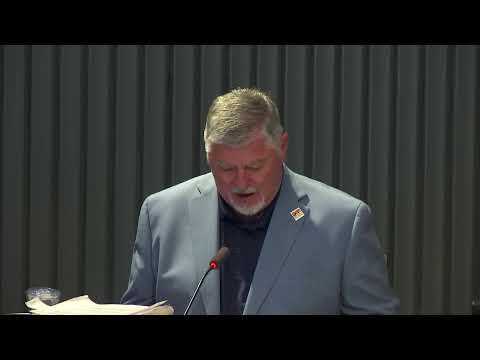
Director of Procurement Kim Baker told council the overhaul modernizes terminology, consolidates provisions into logical chapters, removes outdated references (for example to hard‑copy bid submissions) and aligns the city with statewide procurement benchmarks. “It makes the policies very much enforceable,” Baker said, noting last formal revisions dated to July 2021 and explaining recent cleanups and a department focus‑group review.
Major policy changes and directions: - Public works thresholds: The ordinance updates public‑works procurement thresholds to reflect recent state changes under the California Uniform Public Construction Cost Accounting Act (CUPCCA); Baker said the informal procurement limit for public works will match the state increase (staff cited a $220,000 threshold for formal procurements). - Purchase and contracting limits: Council approved increasing the city manager’s authorization level for purchasing/contracts from $75,000 to $150,000 to reduce consent‑calendar workload and speed routine procurements. The council formalized that change during the meeting’s motion to adopt. - Local preference: The municipal local‑preference policy remains at 5% with a $15,000 cap; several councilmembers asked staff for an analysis of the effect of raising that percentage. Council asked staff to return with modeled impacts at 5%, 6% and 7% (how many procurements would have changed outcomes and the dollar effect).
Procedure: Councilmember Garner moved to approve the ordinance with the city manager limit raised to $150,000 and directed staff to prepare the local‑preference analysis; the motion carried. Because this is an ordinance, council handled it as a first reading; a second reading will be scheduled for formal adoption.
Why it matters: The consolidated ordinance aims to reduce redundant language, make procurement rules easier for departments to follow and provide clearer guidance for contract administration. Council’s decision to increase the city manager threshold is expected to reduce routine consent‑calendar items and speed operational procurement; the requested local‑preference study reflects council interest in balancing small‑business support and fiscal stewardship.
Follow up: Staff will return at the next meeting cycle with the analysis of local‑preference scenarios and the ordinance’s second reading for final adoption.