Get Full Government Meeting Transcripts, Videos, & Alerts Forever!
Get email alerts on the Use Of Force topic
No spam. Unsubscribe anytime.
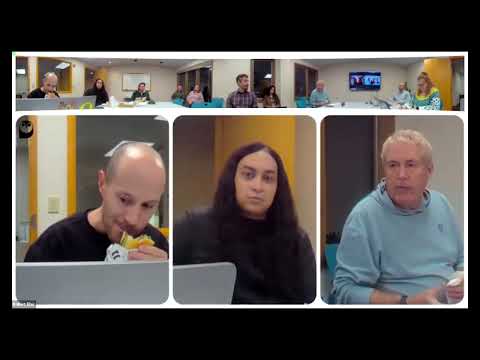
Eugene Civilian Review Board debates July 15 use-of-force findings; members split on adjudication
Summary
At its December meeting the Eugene Civilian Review Board reviewed a July 15, 2023 arrest in which Sergeant C delivered multiple closed-fist strikes and knee strikes to a suspect. The auditor's office recommended all allegations be sustained; EPD chain of command and the police chief found the conduct 'within policy.",
At its December meeting the Eugene Civilian Review Board (CRB) reviewed a July 15, 2023 Eugene Police Department (EPD) use-of-force incident in which Sergeant C struck a suspect repeatedly and delivered knee strikes while officers worked to restrain the person.
The board heard a case summary from staff investigator Rob (last name not specified in the transcript), which presented the incident timeline: officers responded to a disorderly-person call; the suspect exited an apartment about 26 minutes after officers arrived, ran, was taken to the ground and actively resisted. Sergeant C applied a series of closed-fist strikes and two knee strikes while other officers assisted with control and handcuffing, according to the internal materials reviewed by the CRB.
Why it matters: the auditor's office recommended that all three allegations'two counts of excessive force under policy 800.2 (strikes to the head and knee strikes to the head) and one professionalism allegation under policy 103.4.2'be sustained. EPD's chain of command and the chief concluded the same conduct was within department policy. The CRB members debated whether the totality of force used was reasonable and whether Sergeant C's conduct met the department's professionalism standard.
Board discussion and differing views Members spent three rounds of discussion: (1) intake, classification and monitoring; (2) EPD policy, practices and training; and (3) adjudication assessment. Several board members praised the thoroughness of the internal affairs investigation and the auditor's packet, but differed on whether force was excessive. Some members said the force appeared beyond what was necessary once control had been achieved; others said the event occurred in a chaotic, high-stress confrontation and that line commanders and other officers had judged the actions as within policy.
The auditor's memo (read to the board) stated that Sergeant C's actions fell below EPD's professionalism standard and recommended sustained findings on professionalism; the memo recommended sustained findings on the use-of-force allegations as well. EPD supervisory reviews cited the suspect's prior threats, prior possession of a knife on other calls, the suspect's active resistance during the incident, and the operational risks officers perceived at the time.
Votes at a glance - Motion: CRB vote on adjudication recommendations for the July 15, 2023 incident (three allegations: two use-of-force, one professionalism). - Outcome: transcript records members casting mixed votes; the record in the meeting transcript does not contain a clear, single final tally or an explicit board action outcome (final formal tally not specified in the transcript).
Key points raised by board members - Risk perception vs. escape risk: some board members said EPD viewed the greatest risk as the suspect possibly being armed and threatening officers; others noted the suspect was barefoot and close to a fenced area, arguing escape risk was low. - Training and image management: members asked whether additional training on handcuffing, hidden-hands techniques and 'image management' (how force appears to observers) would reduce occurrences where actions are lawful but look excessive to the public. - CAHOOTS / mobile crisis role: multiple members asked how mental-health response teams are routed and whether prior contacts might have prevented escalation; EPD staff said CAHOOTS or mental-health partners sometimes stand by after officers make the scene safe, but when a call indicates imminent threat (damaging a door, threatening entry) police response is typical.
What the CRB reviewed (materials and findings) Staff presented video review, officer interviews, a Blue Team report and an IA report. According to the investigator's summary read aloud to the board, Sergeant C delivered approximately nine closed-fist strikes and two knee strikes during the struggle; EPD noted the adjudication standard is preponderance of evidence for administrative findings and that chain-of-command reviewers concluded the actions were within policy. The auditor's office recommended sustained findings on all three allegations.
Next steps and limitations Board members asked staff to include clearer references in future IA packets about whether and how mobile crisis teams like CAHOOTS were considered or notified, to help the CRB evaluate whether the incident could have been diverted from a police response. The transcript does not show an explicit staff assignment or follow-up deadline from the CRB.
Ending: context The item prompted discussion about the broader system of crisis response in Eugene and about balancing officer safety and public perception. Several members observed that the incident highlighted gaps in mental-health response capacity and urged continued coordination between EPD and community mental-health resources. The transcript does not record a final, unambiguous CRB adjudication tally in a single conclusive line; the board's discussion and individual member positions are recorded in the meeting materials and minutes.