Get Full Government Meeting Transcripts, Videos, & Alerts Forever!
Marathon County committees hear warnings on road-funding gap, pause $30 million shop allocation
Summary
Marathon County committees received reports showing a growing mismatch between transportation needs and dedicated revenue and asked staff to prepare a public summary before the full county board considers any major financial moves.
Marathon County committees received reports showing a growing mismatch between transportation needs and dedicated revenue and asked staff to prepare a public summary before the full county board considers any major financial moves.
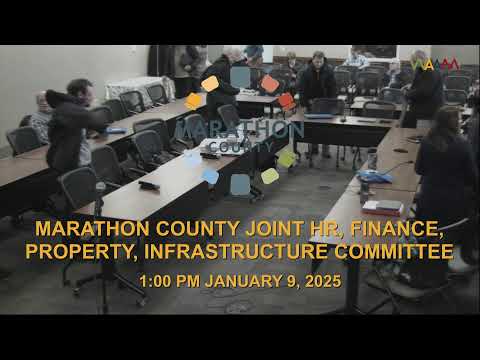
Debbie Jackson, executive director of the Wisconsin Transportation Development Association, told the joint Infrastructure and Human Resources, Finance and Property committees that Wisconsin largely funds roads with “fixed flat fees that are not keeping up with the needs of our aging infrastructure system,” citing the per-gallon gas tax and per-vehicle registration charges as revenue sources that do not automatically rise with inflation. “I think we're in a situation that we probably need more money just to maintain the system conditions we've got,” Jackson said.
The committees heard a technical county-level analysis from the North Central Wisconsin Regional Planning Commission and a local county 2050 highway sustainability study. Planners said Marathon County’s network is large—more than 600 miles—and that, under current revenue trajectories, the county will increasingly fall behind the funding needed to maintain its system at the board’s target PASER rating of about 7.
Why it matters
Committee members and staff framed the discussion as a planning and funding question with near-term and long-term components: (1) how existing revenue streams such as state general transportation aid (GTA), the vehicle registration fee (the county “wheel tax”), and recent one-time transfers have masked structural shortfalls; and (2) whether to use reserves or borrowing to pay for major capital steps such as a replacement highway shop that would also change operational needs.
Key findings and figures discussed
- Jackson summarized statewide context: the state budget…
Already have an account? Log in
Subscribe to keep reading
Unlock the rest of this article — and every article on Citizen Portal.
- Unlimited articles
- AI-powered breakdowns of topics, speakers, decisions, and budgets
- Instant alerts when your location has a new meeting
- Follow topics and more locations
- 1,000 AI Insights / month, plus AI Chat