Get Full Government Meeting Transcripts, Videos, & Alerts Forever!
Get email alerts on the Environment Shoreline topic
No spam. Unsubscribe anytime.
Tequesta partners on $14.5 million shoreline stabilization project for outstanding natural area
Summary
A multi-year shoreline stabilization project in Tequesta received a presentation at the Jan. 9 village council meeting outlining permits, funding and a multi-stage construction plan that includes an experimental shoreline technology, boardwalks, a replacement dock and planting more than 10,000 mangroves.
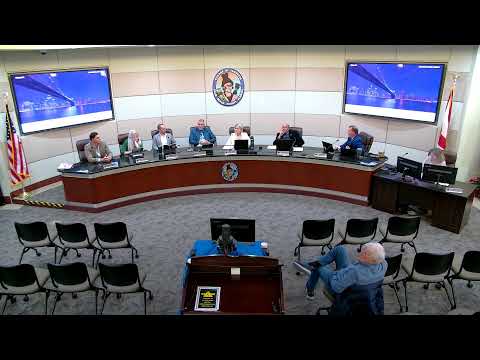
Peter DeWitt, a project partner working on the Jolona property, told the Village of Tequesta council on Jan. 9 that a long-planned shoreline stabilization project for an outstanding natural area is mobilizing this month and is expected to finish in August 2026.
DeWitt said the shoreline has been eroding at “about 7 feet per year” and that the site has lost “over 5 acres of land in the last 30 years.” He described a multi-stage plan that prioritizes dune stabilization, terrestrial trail work, in-water structures, and later construction of a boardwalk and replacement dock.
The speaker said the project is fully funded, including $7,500,000 in federal funds and $7,000,000 from the Florida Inland Navigation District, and that mobilization and environmental compliance began the week before the council meeting. He described a construction sequence that will start with dune stabilization, followed by work in the Loxahatchee/Indian River Lagoon and finishing with the boardwalk and dock. DeWitt said environmental fencing will go up soon and that heavy equipment is expected to arrive in mid-February or early March.
DeWitt also described a 10-year monitored experimental feature north of the bridge sponsored by the University of Miami, and said the project will include roughly 800 feet of boardwalk, a replacement dock (including a public-safety vessel slip and planned boat lift), and the planting of more than 10,000 mangroves. He said the experimental feature will be studied to determine whether it is as effective as traditional stabilization methods and that the data will be used for other shoreline projects in Florida.
Council members asked about changes to boat access. DeWitt said study of boater patterns identified five areas for boat use and estimated peak holiday use at 40–45 boats and average daily use at about 17 boats; he told the council the shoreline design will leave room for about 20 boats so weekday users likely will “not really notice the difference,” though holiday boat traffic will be reduced.
No formal council action or vote was taken on the project at the Jan. 9 meeting; DeWitt presented the status, timeline, funding, and plans for public outreach and environmental compliance.
The village manager and council members thanked DeWitt and the project team for securing permits and funding and for the public-engagement work.
The village and project partners said they will continue public updates as construction proceeds and as monitoring data for the experimental features become available.