Get email alerts on the Staffing Ratios topic
No spam. Unsubscribe anytime.
Board skeptical of staffing-ratio changes; testing‑facilitator proposal faces pushback
Summary
Superintendent staff presented proposed 2025–26 staffing-ratio adjustments that would reduce some instructional ratios and add a testing facilitator at each school; board members expressed concern about removing teachers from classrooms and asked to keep current ratios for 2024–25 while allowing principals to request unit allocations.
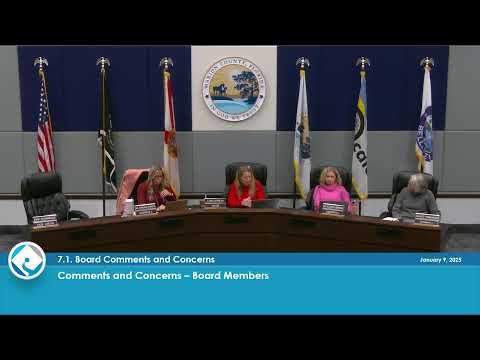
Superintendent staff presented a draft staffing plan for 2025–26 at the Jan. 9 Marion County School Board work session that included lower instructional support ratios and a testing‑facilitator position for each campus.
The proposal: Staff said the committee of principals recommended reductions in some ESE (special programs) ratios, adding a testing facilitator at each traditional campus, and generally decreasing some instructional-support ratios. Committee estimates put the additional cost at about $6.4 million districtwide, plus $2.7 million for planned staffing at two new schools (identified in the briefing as "W" and "X"); staff said the total incremental cost would be roughly $9.1 million. If the board limited the change to adding a testing facilitator at each campus and left other ratios unchanged, staff estimated the incremental cost would be about $3.9 million.
Board concerns: Several trustees opposed broad changes that would move experienced teachers out of classrooms into non‑teaching instructional‑support roles. "I am not going to support adding those units to schools because we all know that it will remove instructional personnel from the classroom," Dr. James said. Dr. Campbell and other trustees warned that adding testing facilitators districtwide would effectively create an administrative role that duplicates many assistant-principal responsibilities and could worsen the district—s ongoing teacher-vacancy pressures.
Principals— rationale: Principal supervisors and principals who served on the committee told trustees the recommended changes were based on school-level needs, including higher numbers of students requiring individualized accommodations and the administrative burden of required assessments and threat-management paperwork. Principals argued that the instructional-support positions could be used flexibly: as testing coordinators, student‑services managers, instructional coaches or content specialists, depending on a school—s needs.
Board decision and immediate direction: Trustees agreed not to change the 2024–25 staffing plan at once; instead they asked principals who believe they need additional units to submit unit‑allocation requests through the district—s established process. The board also directed staff to remove some of the previous restrictions on how schools may use instructional-support units so principals may convert units to roles the school requires.
Why it matters: The staffing plan intersects with the district—s efforts to fill more than 100 teacher vacancies districtwide. Board members emphasized that while principals deserve local flexibility, moving veteran classroom teachers into school-based administrative roles will not help fill vacancies or maintain classroom stability for students.
Next steps: Staff will continue to pilot school‑based budgeting in four schools and return proposed code changes and staffing-plan language for the 2025–26 formal review. The board asked staff to preserve the option for principals to request unit reallocations and to review the impact of any changes on classroom staffing before adopting a districtwide adjustment.
Ending: The board left the staffing ratios for 2024–25 unchanged and asked staff to bring recommended, concrete code edits and training materials through the normal review process ahead of the 2025–26 school year.
AI generated
The text on this page is AI generated. Summaries, highlights, analysis, and video transcripts are all produced from the original source material.
AI can make mistakes, so if you spot one, and we will fix it for everyone.
Note: the source content is unaltered by us. Any content source we link to, be it a video, an audio recording, or a document, is presented exactly as its publisher released it. That publisher is usually a government body, sometimes an individual official or another organisation.