Get Full Government Meeting Transcripts, Videos, & Alerts Forever!
Get email alerts on the Education Vouchers topic
No spam. Unsubscribe anytime.
Bradley County committee to send letter opposing Education Freedom Act vouchers
Summary
Committee members and school officials raised concerns about accountability, equity and fiscal impact of the Education Freedom Act of 2025 and voted to draft a letter to state legislators opposing the measure.
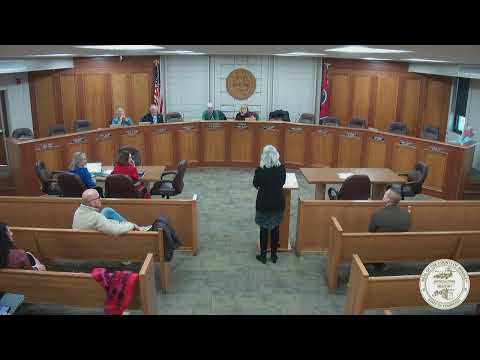
Bradley County Education Committee members voted to draft a letter to state legislators opposing the Education Freedom Act of 2025, a proposed program that would use public funds to pay private school tuition, after hours of discussion about accountability, equity and the potential fiscal impact.
Dr. Cash, a school-system representative, told the committee that the bill could cost the state more than $177,000,000 annually if the first 20,000 scholarship slots were filled, and argued the money would be better spent in public schools. "At the current those that are currently in private schools that this would become available for if those first 20,000 were, slots were not used would cost the state of Tennessee over a $177,000,000 that would be recurring expenses. My my point is I think this is a missed opportunity to invest more funds in public education," Dr. Cash said.
The discussion centered on several recurring concerns voiced by school officials and commissioners: diversion of funds from public schools, unequal access because vouchers may not cover full tuition, reduced transparency and regulatory oversight for private schools, and the risk that the program would not serve students with the highest needs. "Voucher programs often pull funds from public school budgets," Commissioner Louis Alford said in opening remarks; Dr. Cash added that private schools "are not scrutinized nor do they have the accountability that we are in."
Commissioner Mylan Blake read a letter from the school board and said he supported the board's effort to communicate concerns to the legislature. Blake pointed to specific language in the bill that he said would prevent local education agencies from imposing rules on private schools that enroll recipients: "Private schools that enroll recipients must have the maximum freedom to provide for the educational needs of recipients without government control," he read from the bill text and said that language is a key worry.
Committee members also cited existing pilot programs and studies. Commissioner Bill Winters noted that voucher pilots in other counties had not produced positive academic results so far: "The programs that are already in effect have only been in effect for 2 years. The results from those, academic results have not been positive. They are not higher than public schools." Several members urged a longitudinal study of pilot outcomes before expanding any program.
Per a request from Dr. Cash, the committee voted to have staff draft a letter from Bradley County to state legislators expressing the county's concerns and urging lawmakers to prioritize public-school funding. A motion to draft and send the letter was made and seconded; the committee approved the motion by voice vote (aye; no opposition recorded; one member absent). Dr. Cash said he expects to carry the board's concerns to Nashville if given the opportunity.
The committee asked staff to circulate the board's letter and to add the drafting of the county letter to the agenda for the next meeting for formal approval of the final text and a distribution list. Commissioners also requested that staff provide the contact list of education chairs and legislative contacts so the letter can be sent broadly.
The committee discussion combined remarks made during the agenda item and references to a school-board letter that has already been shared with legislators; no statewide law or final legislative action was taken during the meeting.