Get Full Government Meeting Transcripts, Videos, & Alerts Forever!
Get email alerts on the Criminal Evidence Assault topic
No spam. Unsubscribe anytime.
Defense says video and testimony leave reasonable doubt in inmate assault conviction
Summary
In Commonwealth v. Chance (23p950), defense counsel argued the evidence was insufficient to sustain an intentional assault and battery conviction, contending the recorded video and witness testimony could support an accidental or reflexive act or a valid claim of self‑defense.
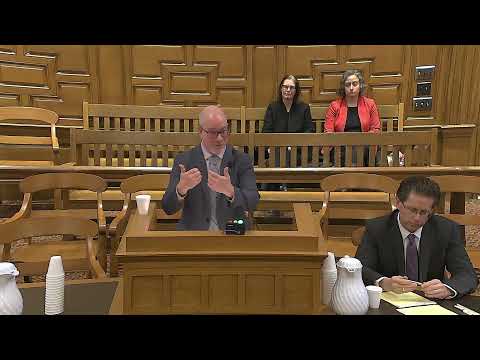
Attorney Rachel Matos argued before the appellate panel that the evidence at trial was insufficient to uphold Clayton Chance’s conviction for assault and battery on a corrections officer because the Commonwealth never proved the act was intentional.
Matos told the three‑justice panel that the trial record lacked proof the defendant had the requisite intent and that the Commonwealth presented no theory of reckless assault and battery. She emphasized the highest criminal standard — proof beyond a reasonable doubt — and said the record could support a finding that the water contact was accidental or a reflexive movement after the officer pushed the defendant.
Justice William Mead and other justices questioned Matos about how the video and other testimony could be read by a factfinder. They pointed to video images that, in their view, showed the defendant approaching the corrections officer with a filled hot‑water bottle and saying “I have something for you,” then raising his arm as an encounter escalated. Matos responded that even if those gestures existed, the Commonwealth bore the burden of proving the touching was not accidental and that the officer’s testimony that he pushed the defendant first supported a reflexive explanation.
Matos also pressed a self‑defense argument, saying the corrections officer’s use of force could have been unreasonable and that the defendant’s actions might have been defensive because, she said, the defendant had been cornered and had limited means of escape. The justices pressed on what a factfinder could reasonably infer from the video and witness accounts, asking whether the officer’s forward step and push could justify the officer’s actions as reasonable force.
The defense rested on its brief after its allotted time expired and the panel took the argument under advisement.