Get Full Government Meeting Transcripts, Videos, & Alerts Forever!
Get email alerts on the Election Law topic
No spam. Unsubscribe anytime.
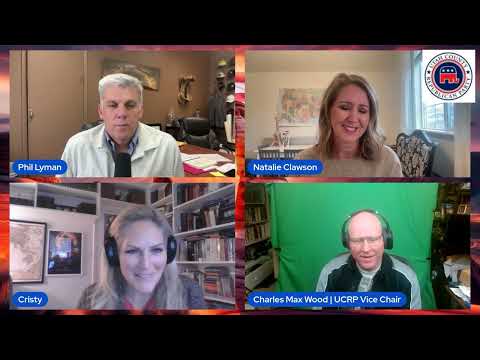
Utah County GOP guests describe U.S. Supreme Court challenge over SB 54 and party nominating power
Summary
Charles Max Wood, vice chair of the Utah County Republican Party, opened a podcast discussion on a legal challenge asking whether SB 54 allows the state to override a party’s decision on nominees.
Charles Max Wood, vice chair of the Utah County Republican Party, opened a podcast discussion on efforts to challenge how Utah’s SB 54 interacts with party nominating rules and the party’s right to associate.
Phil Lyman, a 2024 Republican candidate for governor, said he filed a case that the Utah Supreme Court declined to hear, then petitioned the U.S. Supreme Court. "The question is: does a political party under the First Amendment right of association have the right to choose its candidate without interference from the legislature?" Lyman said. He described reliance on a precedent he identified as New York Board of Education v. Torres Lopez and said the U.S. Supreme Court scheduled the case for a conference on Jan. 10.
Natalie Clausen, the party’s lieutenant governor candidate in 2024, and other participants described two thresholds in practice: the party’s own bylaws and the signature pathway created under SB 54, which allows candidates to gather signatures to reach the primary ballot. Lyman and Clausen argued those two mechanisms can conflict when a convention winner exceeds the party threshold and the signature route still produces a primary.
Speakers said the lawsuit challenges whether the state can force a party’s convention winner into a separate primary. "If the Supreme Court says legislatures can dictate party process, that would be the worst-case scenario for us," Lyman said. He added that he had asked the state GOP to join as a plaintiff; when the party declined, his campaign named the party and state officers as defendants.
Participants described possible outcomes if the U.S. Supreme Court accepts argument: the justices could direct remedy to Utah courts, instruct the state to redo parts of the election, or rule there is no conflict between the party’s rules and state law. The speakers stressed that the case centers on the party’s association rights rather than on signature counts or individual audits.
Why it matters: speakers said a ruling for the party would reaffirm that political parties may set their own internal nominating processes without legislative override. A ruling for the state, they said, could allow or clarify a legislature’s role in defining how parties place nominees on the general-election ballot.
The episode included discussion of how previous Utah races have been run under SB 54 and how historic interpretations of the law have treated a convention outcome that exceeds 60 percent as final. Speakers said that practice changed in the recent gubernatorial contest and that the Supreme Court could provide a binding interpretation.
Ending: Guests encouraged party members and delegates to stay engaged while the legal process proceeds and to watch for any U.S. Supreme Court action that could affect whether party nominating rules or state signature pathways control who appears on Utah ballots.