Get Full Government Meeting Transcripts, Videos, & Alerts Forever!
Get email alerts on the Cottage Housing topic
No spam. Unsubscribe anytime.
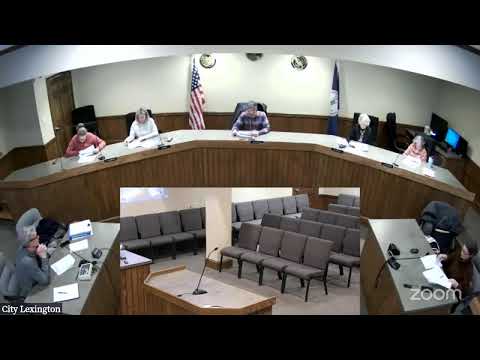
Lexington planning commission finalizes cottage-housing draft, OKs advertisement for public hearing
Summary
Planning staff and commissioners refined the cottage housing draft text — replacing a prescriptive “1–2 individuals” line with language about “smaller households,” adding trash and mailbox rules, and moving a three‑bedroom limit into the density section — and directed staff to advertise the draft for public comment and a hearing.
Arnie, planning staff, told the Lexington Planning Commission the objective for the meeting was to finish the cottage housing draft and "authorize us for advertisement of a public hearing." The commission spent roughly 40 minutes on detailed edits before agreeing to advertise the draft for the commission's next available meeting.
Nut graf: The draft was revised to emphasize intent rather than prescriptive occupancy limits, add operational requirements for solid-waste staging and mail delivery, and place a three‑bedroom maximum in the density section rather than the intent paragraph. Staff said the document will be advertised for public comment and a public hearing in February after any final attorney review.
Commission discussion focused first on occupancy and intent. Arnie, planning staff, reviewed the text history and reminded commissioners that an earlier code sample they had referenced included language about households "typically of 1 or 2 individuals," but that the commission had previously decided not to adopt that strict phrasing. Several commissioners said they preferred aspirational intent language rather than wording that could be read as a limit on household composition. Jason Cox, commissioner, suggested a softer formulation and then offered a drafting alternative: "for smaller households, and have no more than 3 bedrooms," which commissioners accepted as clearer and less prescriptive.
On the regulatory placement of a three‑bedroom limit, staff recommended—and commissioners agreed—to place a firm maximum on bedrooms in the density subsection (B.1) so it would operate as an enforceable dimensional/size standard rather than as aspirational intent text.
The draft also added two new operational sections. On solid waste, the draft requires staging areas or dumpsters to be located and screened so they are less visible from frontage streets than the cottages; dumpster placement should be along one side of the access drive provided it does not interfere with vehicular circulation; and the Department of Public Works must provide written confirmation of an acceptable location and that access drives meet minimum roadway standards. Staff explained the city "prefers any cottage housing development utilize a dumpster," but allows rolling-cart bins for smaller developments; commissioners discussed an internal threshold ("half the maximum number of cottages allowed") so small developments could use carts while larger ones would require dumpsters. As an example in discussion, staff said a development that could accommodate 10 cottages would exceed that halfway point and therefore require a dumpster.
On mail delivery, the draft requires cluster mailboxes or other mail receptacles to conform to United States Postal Service requirements and asks applicants to secure written confirmation from the local postmaster of the mailbox type and location before a conditional use permit is deemed complete.
Other changes included recommending (not requiring) native species in landscaping, adding rain gardens to low-impact design techniques, clarifying nonconforming-dwelling modification rules (with a corrected local code cross-reference to section 420-11.1.2.g), and leaving cooperative ownership (co‑ops) out of the advertised draft pending counsel advice. Arnie told the commission he had circulated the draft to the city attorney but "haven't heard back" and recommended advertising without immediate co-op language if attorney input was not timely.
Commissioners and staff agreed the draft is ready to advertise for public comment and a first public hearing in February. Arnie said staff would place the draft on the next available Planning Commission meeting packet for the required advertisement period and noted the draft could be revised after public hearing input and further attorney review.
Ending: The commission closed public comment (no members of the public attended as non‑officials) and directed staff to proceed with advertisement. No final ordinance or regulation was adopted at the meeting; the changes discussed will appear in the advertised draft and may be altered following public comment and further legal review.