Get Full Government Meeting Transcripts, Videos, & Alerts Forever!
Get email alerts on the Jail Construction topic
No spam. Unsubscribe anytime.
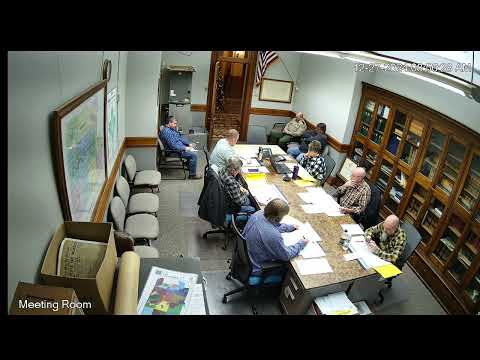
Osceola County supervisors approve resolution to proceed with jail construction despite cost concerns
Summary
The Osceola County Board of Supervisors voted to approve Resolution 22 to proceed with the current jail construction contract after debate over scaled-back design, change-order risk and funding limits set by a prior bond measure.
The Osceola County Board of Supervisors voted to approve Resolution 22 on Dec. 27, 2024, authorizing the county to proceed with the current jail construction contract despite remaining concerns about cost and scope. The motion carried by voice vote; the tally was recorded as four in favor and one opposed.
Supervisors debated whether to rebid the project or accept the current low bid and then use “value engineering” to remove optional items. The discussion focused on differences between the originally planned two-level facility and the board-approved single-floor build with the upper level left as a finished shell for future expansion. John (staff member), who described the construction layout and expansion capacity, said the structure is sized so future upper-level cells can be added by removing drywall and installing cells and stairs, reducing long-term disruption and keeping sight lines in the facility.
Why it matters: The county’s prior public vote limited bonding for the project to $5,000,000; speakers repeatedly noted the county cannot exceed that cap without further voter approval. Rochelle (staff member) warned, “We can’t go over the $5,000,000,” a constraint that shaped supervisors’ reluctance to widen the scope or pursue financing options that would raise the county’s borrowing above the cap.
Board members pressed staff and consultants on specific cost and capacity figures. Staff said finishing one upper-level dormitory in the future was estimated at about $93,000 based on alternates from bids, while an upper-level medium/maximum mezzanine option was in the roughly $187,000 range. The project as proposed retains the lower-level medium/maximum cells and the mechanical systems sized to accommodate a later upper-level finish, which the presenter said reduces future HVAC and plumbing upgrade costs.
Several supervisors expressed concern about potential change orders and inflation-driven price increases if the county delayed work and rebid. One supervisor said rebidding might not yield savings, and another said the county had already reduced the scope “so far scaled back from where we started” that rebidding risked losing desirable features.
The recorded motion to proceed with Resolution 22 did not specify commitment to every value-engineering alternate; staff and supervisors discussed removing some alternates to reduce cost. After the motion passed, staff said the contract would be signed promptly and a preconstruction meeting would be scheduled for either Dec. 31 or Jan. 2 to move contractors onto the project.
On funding options, supervisors and staff discussed whether USDA loans or grants were viable. Staff cautioned that USDA loan or grant conditions can require Davis-Bacon prevailing wages across a project, increasing labor cost; they also noted the county’s $5,000,000 bonded cap could limit taking additional loans without reducing planned general-obligation borrowing.
Next steps: Staff will finalize the contract signature, distribute the signed contract to the contractor, and hold a preconstruction meeting to begin work. Supervisors indicated they expect to continue evaluating specific value-engineering alternates during early construction to limit overall cost while preserving future expansion capacity.