Get Full Government Meeting Transcripts, Videos, & Alerts Forever!
Get email alerts on the Police Staffing And Governance topic
No spam. Unsubscribe anytime.
Wolfeboro police commission addresses officer retention, institutes formal exit‑interview process
Summary
Commissioners and the police chief responded to public concerns about officer departures by formalizing a townwide exit‑interview process and outlining a multi‑year push for state accreditation.
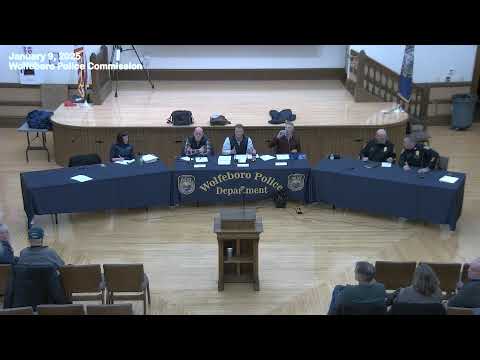
At a meeting of the Wolfeboro Police Commission (date not specified), Police Chief Sean Coop and commissioners responded to public complaints about officer departures and low street presence by announcing a new, townwide exit‑interview process and continuing work toward state accreditation.
The issue of officer retention and internal investigations drew the meeting's longest public comment. Pete Lewellen, a retired Wolfeboro police officer and resident, told the commission: "I believe that a majority of the police commission is not acting in the best interest of their constituents and the town of Wolf Earl and that they may have an agenda." Lewellen pressed the commission for information on internal investigations, exit interviews offered to departing officers and the status of an investigation he said had been submitted to police standards and training in Concord.
The concerns prompted a procedural change. Police Chief Sean Coop said he conducted two exit interviews personally to learn why officers were leaving but agreed the practice should be moved to human resources so departing employees would feel free to speak. Michelle Chamberlain, identified in the meeting as the town HR officer, described the new process: "anytime a member of the police department leaves the police department, that will trigger a communication from the chief to the HR administrator, who will then reach out to that individual and schedule them for an interview." The chief and commissioners said the practice will be adopted townwide and was effective January 1.
Commissioners and the chief also discussed retention strategies raised by residents, including the suggestion of "stay interviews" (conversations with current staff to identify problems before they resign). Resident Fred Keene recommended proactive retention efforts: "Maybe do the exit interview, but do a stay interview and try to retain these people before it's out the door."
Chief Coop and commissioners described a separate but related initiative: a push for New Hampshire state police accreditation. Coop said the department has been working on accreditation-related policy writing for about a year and has adopted roughly 45 policies so far, using an electronic system called PowerDMS to distribute policy updates to officers. "We're writing policies that are best practices," Coop said, and emphasized that accreditation requires both written policies and documented enforcement of those policies. Commissioners noted the accreditation process typically takes two to three years and requires demonstration that the department enforces its policies, not just that policies exist.
Residents also described limited visible patrols and traffic‑safety concerns. Wendy Rogers, a longtime resident, said drivers routinely ignored crosswalks and that she feared a serious crash without greater enforcement; she told the commission she felt unsafe crossing certain downtown streets and on College Road. The chief acknowledged the complaints, said the department has equipment to address speed complaints and pledged to increase enforcement where practical.
As part of recruiting and hiring, the chief said the department has issued two conditional offers and is using civilian volunteers on interview panels. The chief asked residents to volunteer for interview boards to broaden community input into hiring decisions.
Why it matters: Commissioners said retaining trained officers and adopting state accreditation will affect department stability, liability and public trust. The new HR‑led exit‑interview process is intended to gather candid feedback from departing employees and to feed any systemic concerns back to the commission and chief for follow up.
The commission scheduled its next regular meeting for Thursday, February 13, 2025, at 6 p.m. in the Great Hall.