Get Full Government Meeting Transcripts, Videos, & Alerts Forever!
Get email alerts on the Public Outreach Workshop topic
No spam. Unsubscribe anytime.
Tequesta EAC schedules evening workshop on living shorelines; March dates proposed
Summary
The Village of Tequesta Environmental Advisory Committee agreed to organize an informational evening workshop on living shorelines for residents, proposed several March dates and a 6–7 p.m. start, and discussed speakers, venue, and targeted outreach including a possible mailer to waterfront property owners.
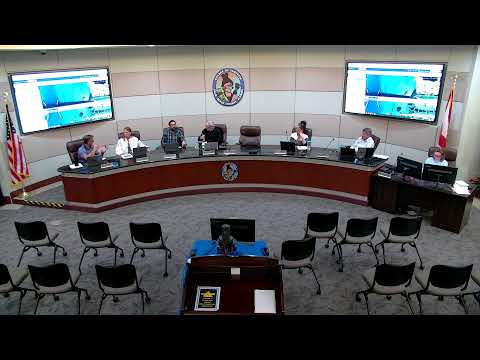
Vice Chair Tom Bradford and members of the Village of Tequesta Environmental Advisory Committee agreed on planning steps for an evening public workshop about living shorelines and related coastal initiatives, aiming for March at the Tequesta Recreation Center.
Bradford said the event would be informational rather than a formal EAC meeting and asked members to confirm date, time and location. "As discussed in December, the committee . . . agreed that EAC would hold a meeting during the evening to promote community participation and engagement in environmental initiatives," he read from a memorandum prepared by Brad Fries. Bradford and staff proposed a 6–7 p.m. weeknight timeslot and six candidate dates: March 3, 4, 6, 17, 18 and 19.
The committee identified proposed speakers and content: a brief kickoff by Fries, an introduction to living shorelines, presentations on natural and engineered solutions from outside speakers described in the record as "Meng" and representatives of "Reef Arches," and a local example presentation by Peter DeWitt. Utilities Director Marjorie Craig was invited to present the village's recent resiliency study and the Dover Ditch living-shoreline project so residents could hear local context and ongoing municipal work.
Members debated length and format. The group favored a short kickoff followed by back-to-back presentations and a single question-and-answer period at the end to keep the total program compact. Bradford said the committee preferred to advertise the event broadly once a date is set: "I would like to confirm the details and start advertising this event as soon as possible," he told the group.
Staff and committee members discussed marketing and targeted outreach. The EAC supported producing a one-page flyer for the village e-newsletter and considered a direct-mail postcard to waterfront property owners. Staff warned that compiling a precise waterfront mailing list from the property-appraiser’s records would be manual and could take about a week unless the village can use GIS to filter addresses. A staff member said the village would investigate technical options and local contacts who might help automate address selection.
The committee left the schedule flexible: staff said they had already confirmed availability of the Recreation Center’s large meeting room for the six candidate dates and would send dates to Fries and invited speakers to confirm the best date. Members agreed to keep the 6–7 p.m. window or extend to 1 hour 15 minutes if presenters require it. Bradford asked staff to begin outreach after speakers confirm availability.
Planning notes the committee asked staff to carry forward include finalizing a short, public-friendly title (several members suggested wording such as "Future of Our Shorelines"), confirming the speaker lineup and order, producing a one-page flyer for the village newsletter, and exploring the feasibility and cost of a targeted postcard to waterfront homeowners.
The workshop planning was informational; no formal ordinance or policy decision was made at the meeting.