Get Full Government Meeting Transcripts, Videos, & Alerts Forever!
Get email alerts on the Labor Negotiations topic
No spam. Unsubscribe anytime.
Pembroke Park negotiators agree to build pay scale after wage standoff in police bargaining session
Summary
Town management and Fraternal Order of Police representatives met to negotiate police wages. The union pressed for larger raises and a higher top-out; the parties agreed to exchange a formal pay scale and reconvene to quantify costs, with no contract ratified at the meeting.
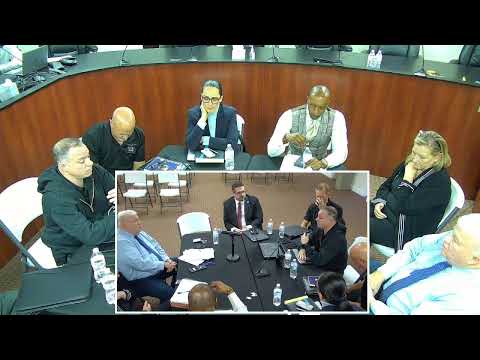
Town of Pembroke Park officials and representatives of the Fraternal Order of Police (FOP) met in a collective bargaining session to discuss patrol pay and staffing. The union asked for substantially higher pay and step increases; town management said budget limits constrained what it could offer. The parties agreed to develop a formal pay scale and to return to negotiations on the 24th to review numbers, but did not reach a final agreement.
The union side, represented in the meeting by Denise (FOP representative) and Sergeant Dodge, pressed for larger increases than the town proposed. Denise said, “Wages is always the most important issue. Right? Let’s let’s face it. It is.” Sergeant Dodge described staffing pressures, saying, “I run with three officers on a shift,” and added that officers there “handle a lot more calls for service individually” than some neighboring agencies.
Town Manager Dave Lynch acknowledged the cost and scope issues and defended the decision to maintain a local police force. Lynch said a local department offers “a greater familiarity with the community,” adding that rebuilding and staffing a department is “a gigantic challenge.” Town staff suggested establishing a clear step plan (number of steps and percent between steps) first, then calculating the budgetary impact of any raises.
The two sides disputed which numbers should anchor the pay scale. The union described prior proposals that the town characterized as a 12% increase at top-out and a 5% merit component; management said its earlier positions included a lower combination (for example, a 5% COLA and 3% merit in earlier drafts). Negotiators discussed three different percentage frameworks that had been on the table: a 10/10/10 annual-percent framing, a later 12/12/12 framing, and the union’s earlier step/merit breakdown that the union said came to about a 12% net increase.
Participants reviewed several example salary ranges raised during the meeting. Union materials presented one patrol-officer scale starting near $58,279 with a top-out around $76,041; town staff and negotiators discussed other figures, including earlier internal ranges that had been cited as roughly $55,000–$86,000 (the union said those top-out figures had been changed in the town’s payroll system to $56,000–$74,000 for some job codes). A staff member noted that some posted overtime figures were inconsistent; negotiators used a 20% overtime estimate for planning but agreed overtime projections would be refined when the town supplied current payroll data.
Rather than press an immediate vote or ratification, both sides agreed on a step-forward approach: the union will provide its preferred pay-scale worksheet, the town will provide current base salaries in Excel (without projected overtime), and both will model how officers would be slotted into any new step plan. The parties set a tentative follow-up negotiation date for the 24th and asked to have concrete pay-scale comparisons ready by then.
No formal motions, votes, or contract ratification occurred at the session. Management emphasized budget constraints and legal limits on spending within the town’s revenue; the union emphasized officer retention and safety concerns tied to current staffing levels. Both sides said establishing a clear pay-scale structure first would let them quantify the fiscal impact of raises and make subsequent bargaining more productive.
The session included several references to comparable agencies (Sunrise and Broward County) and to internal payroll records (ADP). Negotiators also discussed rank differentials (suggesting typical sergeant-top premiums might be around 15% above patrol officer top-outs) and whether step counts should top out at 10 years for patrol officers. No changes to policy or staffing were implemented during the meeting.
Next steps recorded in the meeting: exchange of pay-scale worksheets and the town’s most recent base-salary Excel file (excluding overtime), modeling of costs by both parties, and a follow-up negotiation session on the 24th to review modeled impacts. The parties also agreed to clarify overtime data and to slot current officers into any new step plan as part of the next session.