Get Full Government Meeting Transcripts, Videos, & Alerts Forever!
Get email alerts on the Water Utility topic
No spam. Unsubscribe anytime.
Laredo utility staff reorganize water-quality work, tighten backflow enforcement and plan pipe, lab and meter upgrades
Summary
Utility staff reported moving bacteriological sampling to the water plant, stepped-up enforcement after a TCEQ complaint, a plan to replace 20+ mains this year, lab certification to bring testing in-house, a four-year automated meter replacement and a transition of stormwater into utilities.
Utility staff reported a series of operational changes and near-term projects intended to strengthen water quality oversight and reduce system failures, telling an advisory committee that bacteriological sampling has been moved to the city’s water plant, backflow and cross-connection control will be enforced more aggressively after a TCEQ complaint, and at least 20 water mains are targeted for replacement this year.
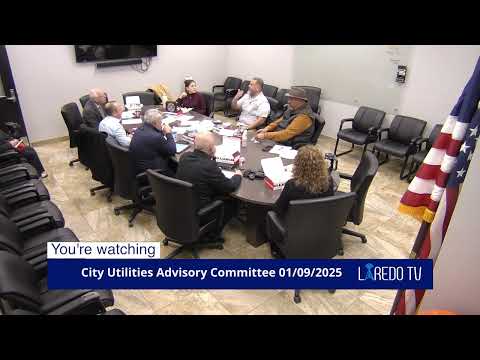
The update, presented during a committee meeting in Laredo, outlined several interconnected efforts intended to improve public-health compliance and system reliability. Staff said the city will pursue certification of an in-house lab to shorten testing turnaround, expand a valve and main-replacement program, begin a four-year automated meter infrastructure (AMI) replacement, and absorb some stormwater functions into the utilities operation for operational synergy.
The cross-connection and backflow program drew immediate attention. Staff described a recent resident complaint that triggered a TCEQ review and said the city is now focusing on registering certified backflow testers, collecting annual test certificates, and following up when owners do not provide proof of inspection. Staff emphasized that backflow devices remain the property of building owners; owners are responsible for repairs and testing, and the utility will send notices and pursue compliance steps when certificates are missing.
Officials said the city’s new tracking system will show which devices are compliant and which are not. Where a device fails, staff said the failure will be recorded in the system and the city will notify the property owner and follow established enforcement steps if the owner does not remedy the problem. Staff noted limitations: contractors or testers cannot make repairs without owner authorization, so some repairs will be scheduled and tracked rather than performed immediately by the tester.
On lab testing and sampling, presenters said bacteriological sampling previously handled by the pollution-control group has been moved to the water plant to reduce handoffs. The city lacks certified in-house testing capacity at two water plants; staff proposed buying equipment, certifying a laboratory at the North Laredo facility, and eventually performing more sampling locally to improve turnaround and reduce outside costs. Staff said the change could yield cost savings and faster detection of parameter excursions that affect compliance.
Infrastructure improvements were described as a major focus. Staff said the utility has identified more than 20 mains for replacement this year, will go to bid on at least two major mains soon, and is evaluating trenchless versus open-cut methods based on price and value. A valve program is under way: staff reported orders placed for two automated trucks and four automated valve-operating tools to reduce the size and duration of planned shutdowns and to detect inoperable valves before outages occur.
On wastewater, staff provided an update on a new wastewater-plant project and an associated tunnel. The team is building a 42-inch conveyance that will tie into a 54-inch line and a new wastewater plant expected online by year-end, with the tunnel and full transition targeted in mid-2026. Staff said parts of an older treatment basin at the Zicate plant were abandoned after bank sloughing exposed and compromised a basin; engineers have proposed stabilization options and the city will evaluate investment needs.
Staff also described pilot and planning work on AMI meters and a customer portal. The utility intends a roughly four-year roll-out to replace legacy meters and improve customer contact data and communications. The utility also said it has accelerated a required inventory of service lines under new lead service-line rules, reporting the inventory is completed and that the city will publish the inventory and send the required public notice within the mandated 30-day window.
Other organizational moves discussed included a staff realignment that relocates water-conservation functions into a renamed Water and Air Quality Monitoring division and a personnel promotion within that group. Staff said stormwater responsibility was announced for transition into the utility department to create synergies in people and equipment and to seek operating efficiencies.
Committee members and staff also discussed developer and contractor practices. Staff reported a recent change: all new T-service irrigation connections will be provided as 1.5-inch service lines to match the city ordinance and reduce later retrofits. Staff said the change was circulated to engineers and contractors and that the utility will allow existing undersized services to remain but require owners who want irrigation meters to meet the larger-size requirement or pay for upgrades.
Staff framed the package of changes as execution-focused: finalize master plans, reduce handoffs for sampling and compliance, improve communications with council members and the public, and prioritize capital spending that is necessary for regulatory compliance. Officials said compliance obligations are the highest priority in capital budgeting.
The advisory committee did not take formal votes during the update. Staff asked committee members to forward topics they want addressed at future meetings and said they would email agendas in advance to allow council members and volunteers to identify issues for discussion.
Ending: Staff indicated many items are at early development or procurement stages; timelines given included main replacements in short order, lab certification and robotics in the coming year, and the wastewater tunnel transition around mid-2026. The utility asked for patience while the city implements improved procedures and reporting.