Get Full Government Meeting Transcripts, Videos, & Alerts Forever!
Get email alerts on the Judicial Review Pension Ptsd topic
No spam. Unsubscribe anytime.
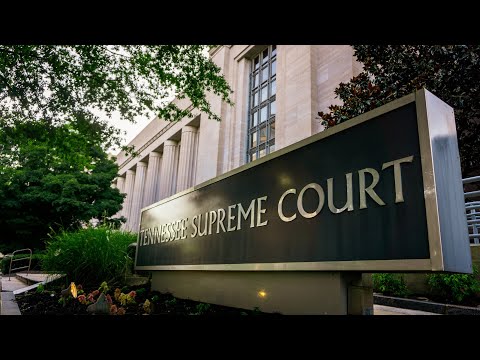
Tennessee Supreme Court hears dispute over ‘unexpected’ PTSD standard in Chattanooga pension denial
Summary
Knoxville, Tenn. — The Tennessee Supreme Court heard oral argument in Matthew Long v. Chattanooga Fire and Police Pension Fund on the meaning of “unexpected” in the fund’s disability policy and how much deference courts must give the fund when reviewing denials of benefits.
Knoxville, Tenn. — The Tennessee Supreme Court heard oral argument in Matthew Long v. Chattanooga Fire and Police Pension Fund on the meaning of “unexpected” in the fund’s disability policy and how much deference courts must give the fund when reviewing denials of benefits.
The case concerns whether Long, a Chattanooga firefighter who was diagnosed with post‑traumatic stress disorder, met the pension fund’s requirement that a disabling traumatic event be “unexpected” and “undesigned,” and whether the lack of written findings by the fund prevents meaningful judicial review under the Uniform Administrative Procedures Act (UAPA).
The outcome matters because the court’s interpretation will affect how pension boards and courts resolve PTSD and other disability claims for first responders across Tennessee. Counsel for both sides told justices the case raises discrete legal questions about subject‑matter jurisdiction under the UAPA, the applicable standard of review, whether courts may decide the legal issues on the existing record or must remand for written findings, and how to apply or define “unexpected.”
Bob Parsley, counsel for the appellant pension board, opened by asking the court to “reverse the judgement of the court of appeals and reinstate the denial of benefits,” arguing that judicial review under the UAPA is available even when a local pension board did not follow contested‑case procedures and that the absence of written findings “does not preclude judicial review.” Parsley told the court it may “remand for further proceedings” in some cases but said the record here contains a “small number of undisputed facts” that allow the court to conduct its independent review.
Janie Varnell, counsel for Matthew Long, urged the court to affirm the Court of Appeals. She argued three principal points: that courts have subject‑matter jurisdiction over the dispute, that Long satisfied the fund’s policy requirements linking PTSD to “unexpected and undesigned” events, and that the court may apply the pension plan’s liberal‑construction doctrine favoring employees when the policy is ambiguous. Varnell emphasized the parties’ medical and psychological evidence in the record, saying the “expert medical proof” in volumes 1 through 7 supports Long’s claim and was not refuted by the fund.
Justices pressed both sides on legal doctrine and practical consequences. Several asked whether the UAPA’s “arbitrary and capricious” standard requires de novo review of legal questions and only defers to agencies on factual applications; whether common‑law deference to an agency’s interpretation of its own regulations should be limited to instances of ambiguity; and whether an agency’s belated litigation‑time interpretation is entitled to deference. Parsley acknowledged that where the board has articulated no prior interpretation, there may be nothing for courts to defer to and said the statutory standard nonetheless permits courts to affirm if the board’s denial is rational in light of the record.
Both sides disputed whether the term “unexpected” is ambiguous in the pension policy and, if ambiguous, how to apply either liberal construction in favor of employees or ordinary interpretive rules. Varnell argued the term is ambiguous as applied to PTSD claims for first responders because training covers many traumatic events, and tying “unexpected” to an officer’s training could make recovery “insurmountable.” She pointed to case law (including an unpublished Tennessee decision, Presley v. State) as an example where expert medical evidence supported benefits despite repeated traumatic exposures.
The record details discussed at argument include four discrete traumatic events relied on by Long, the presence of extensive psychological and medical records (volumes 1–7), and that the applicant was not asked at the pension hearing whether he considered the events to be unexpected. Counsel also debated statutory citations and prior Tennessee decisions cited in briefs (including Davis v. Shelby County, Tidwell, Levy, CF Industries, Vodafone, Taylor and Collins) for how courts should treat agency interpretations and when remand is required if a board issues no written findings.
No decision was issued from the bench. After argument, the court took a short recess and did not announce a ruling.
The court’s eventual opinion will clarify whether courts reviewing municipal pension boards must remand when boards issue no findings, how much deference to afford board decisions that lack a stated interpretation, and what standard governs “unexpected” when applied to PTSD claims for public safety employees.