Get Full Government Meeting Transcripts, Videos, & Alerts Forever!
Get email alerts on the Housing Repair topic
No spam. Unsubscribe anytime.
New Iberia council approves criteria for ARPA 'One Block at a Time' home-repair program
Summary
The City of New Iberia approved rating criteria for a $900,000 American Rescue Plan Act program to repair homes for low- and moderate-income residents. Staff will rank more than 200 applications and select roughly 40–55 homes, with a $150,000 contingency for roof work and a three-year holding period on assisted properties.
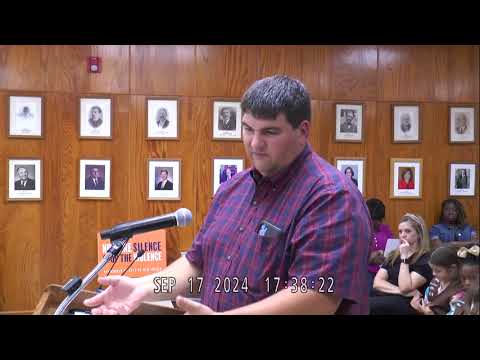
The City of New Iberia on Tuesday approved resolution 24112, adopting the rating criteria for “One Block at a Time,” a home-repair program funded with American Rescue Plan Act (ARPA) money.
The vote lets staff begin scoring applications and selecting finalists from the more than 200 submissions the city received for the $900,000 program. The council and staff said they expect to fund roughly 40 to 55 homes depending on scope, and they set a $150,000 contingency to cover unexpected roof repairs.
Mayor (presenting the item) told the council the program is intended to target low- and moderate-income owner-occupied homes with a point-driven selection process. “We have $900,000. So when you multiply that out, divide that out, you can do probably 40 to 50 houses at the max, depending on what people have asked for,” the Mayor said. He described criteria that award points for senior status, disability and other priorities, and said staff would first remove ineligible applications before scoring.
Why it matters: Council members described the program as a way to address pressing housing needs—especially failing roofs—which can block residents from accessing other assistance. Officials said the program is designed to be an objective, staff-led selection process that produces a list of primary picks and alternates so the city can commit funds before the ARPA deadlines.
How the selection will work: Under the approved criteria, applications will be scored on a points system; staff will grade applications and return a ranked list to the council. Selected homeowners must sign program agreements; an architect will inspect each selected property to produce a scope of work before contracts are bid. If an inspected property proves structurally infeasible, staff will move to alternates on the ranked list.
Program details and limits recorded in the meeting: - Funding: $900,000 in ARPA funds allocated to the program. - Expected reach: roughly 40–55 homes, depending on the mix of repairs requested. - Roof contingency: $150,000 set aside to ensure partial projects can be completed if extensive rot is uncovered once work begins. - Prior per-home guidance: the council previously discussed an approximate $25,000 per‑home target; officials said that amount will be adjusted where roofs or other high-cost items are included and that the current vote amends that framework. - Holding requirement: assisted properties will be subject to a three-year holding period to discourage flipping. - Timeline: staff must commit the money by the end of the calendar year; the ARPA spending window extends through 2026.
Council questions focused on scope and safeguards. Councilman Dan Dahl asked how the city would handle projects that exceed earlier per-home estimates: “If we have to go into escrow on a house, say, of $10,000 above that 25, then we kinda exceed what we approved,” he said. The Mayor and other council members explained that the contingency and the architect’s scope work are intended to manage those risks and that any substantial changes would be brought back to the council for approval.
Community outreach and next steps: Staff will finish scoring applications, notify applicants who do not qualify, and prepare a ranked list of finalists and alternates. Selected applicants will be asked to sign agreements; after architects complete inspections and the city prepares scopes of work, contracts will be advertised and awarded following the city’s procurement rules. Officials emphasized the process will take months, not weeks, and that scheduling and bidding will determine the pace of construction.
Quotes from the meeting capture the council’s tone. Councilwoman Didi Johnson Reed said, “So it says total 55 that we can help,” reflecting discussion about the program’s reach under current estimates. Mayor urged patience on timing, noting the work requires procurement, architectural scopes and coordination with contractors.
The council approved the rating criteria by motion; staff will return with the graded list and draft agreements for those selected.