Get Full Government Meeting Transcripts, Videos, & Alerts Forever!
Get email alerts on the Overdose Response topic
No spam. Unsubscribe anytime.
Laredo committee credits community effort for 52% drop in drug-related deaths, backs bills to legalize test strips
Summary
Laredo public health officials reported a 52% decline in drug-related fatalities between 2023 and 2024 and the committee approved a letter supporting legislative efforts to legalize fentanyl and other drug test strips in Texas.
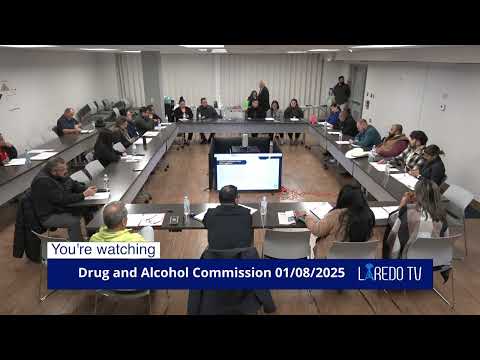
LAREDO — Laredo Public Health officials told the Drug and Alcohol Committee that drug-related fatalities in the city fell by 52% between 2023 and 2024, and the committee voted to send a letter of support for legislative initiatives aimed at expanding harm-reduction tools such as fentanyl test strips.
Dr. Ricky Cubile, reporting to the committee, said the drop reflected a coordinated, multiagency effort. “We did push out a a news release regarding the drug related fatalities in Laredo by 52% between 2023 and 2024,” he said. Cubile credited expanded harm-reduction work and community partners for the change.
The committee’s action came after Cubile reviewed local and national attention to the city’s overdose-response work. He said Laredo submitted an abstract to the Overdose Response Strategy conference to share local strategies and noted coverage in the American Public Health Association’s The Nation’s Health. Cubile also flagged national debate on cannabis regulation and highlighted peer-reviewed research the department is tracking.
Committee members discussed pending Texas legislation to legalize drug test strips. Cubile said Representative Oliver Sutton’s House bill 362 was refiled this session and that a separate senate filing by Senator Cook Earhart would address fentanyl test strips. He described those measures as harm-reduction strategies intended to reduce fatal overdoses if enacted.
After discussion, the committee voted to approve and send a letter of support to state legislators for two items: expanded mental-health supports and legalization of fentanyl (and other) test strips. The committee agreed to circulate an editable draft, collect electronic signatures and transmit the letter by certified mail and email before the legislative session progressed.
The committee asked staff to circulate links to the abstracts and articles Cubile cited and to notify members when the letter is ready for signatures. No budgetary commitments or policy changes were enacted by the committee itself; the letter is a formal expression of support to lawmakers.
The committee’s next regular meeting was announced for Feb. 12; members said they would aim to send the letter earlier in the month.
Why it matters: Fentanyl test strips and similar tools are central to many local harm-reduction strategies because they can detect fentanyl contamination in other drugs. Legalizing distribution would change what community organizations and individuals can provide without legal risk, and the committee’s letter is intended to communicate local support to state lawmakers.